Moving to Canada involves several financial steps, and opening a bank account is one of the first things. A Canadian bank account makes it easier to receive your salary, pay rent and utility bills, manage everyday expenses, and transfer money. The good news is that you don't need to be a Canadian citizen or have an established credit history to open a personal bank account. Newcomers, international students, and foreign workers may also qualify, provided they meet the bank's identification requirements. If you are wondering how to open a bank account in Canada, this guide explains the documents you will need, how to choose a bank, and the steps involved in setting up your account.
1. Can Newcomers and Foreigners Open a Bank Account in Canada?
Yes. You can open a personal bank account in Canada even if you are not a Canadian citizen. Permanent residents, temporary foreign workers, international students, and people living outside Canada may all be eligible.
Under Canada's banking rules, you can open an account even if you:
- Don't have a job.
- Don't have money to deposit immediately.
- Have no Canadian credit history.
- Have previously declared bankruptcy.
However, the bank must be able to verify your identity using acceptable identification documents. Depending on your immigration status and the financial institution, you may need to visit a branch in person.
2. What Documents Do You Need to Open a Bank Account in Canada?
Preparing the right paperwork can make the application process much easier. Generally, Canadian banks must verify your identity before opening an account.
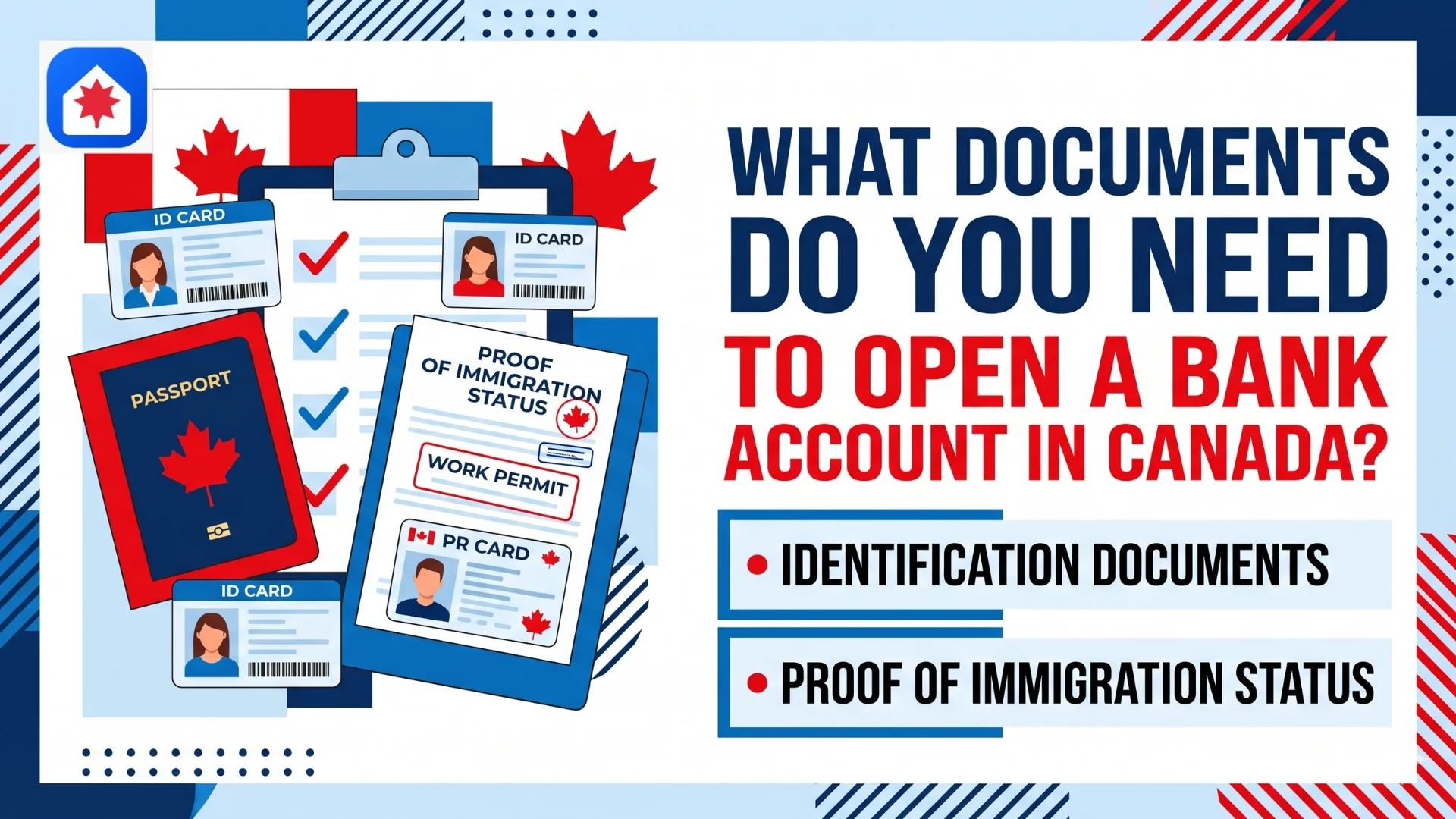
2.1. Identification Documents
One option is to provide two documents from reliable sources:
- One document showing your name and address.
- Another document showing your name and date of birth.
Acceptable documents to open bank accounts in Canada may include:
- A valid foreign passport.
- Government-issued identification from Canada or a province.
- Recent Canadian utility bills.
- Recent government tax assessment notices.
- Recent government benefit statements.
- Recent Canadian bank account or credit card statements.
Another option is to provide one reliable document showing your name and date of birth, together with identity confirmation from an eligible person, such as an established customer of the bank or a person of good standing in the local community.
You must provide original identification rather than photocopies. The exact documents accepted may depend on your circumstances and the bank's verification procedures. Check with the institution before your appointment.
2.2. Proof of Immigration Status
Although immigration documents are not automatically required in every identification combination, banks may request them to establish your residency status or determine your eligibility for a newcomer banking program.
Depending on your situation, prepare one or more of the following:
- Permanent Resident Card.
- Confirmation of Permanent Residence (COPR).
- Valid work permit.
- Valid study permit.
- Other immigration documents issued by Immigration, Refugees and Citizenship Canada (IRCC).
- International students may also need proof of enrolment at a Canadian educational institution to qualify for certain student banking offers.
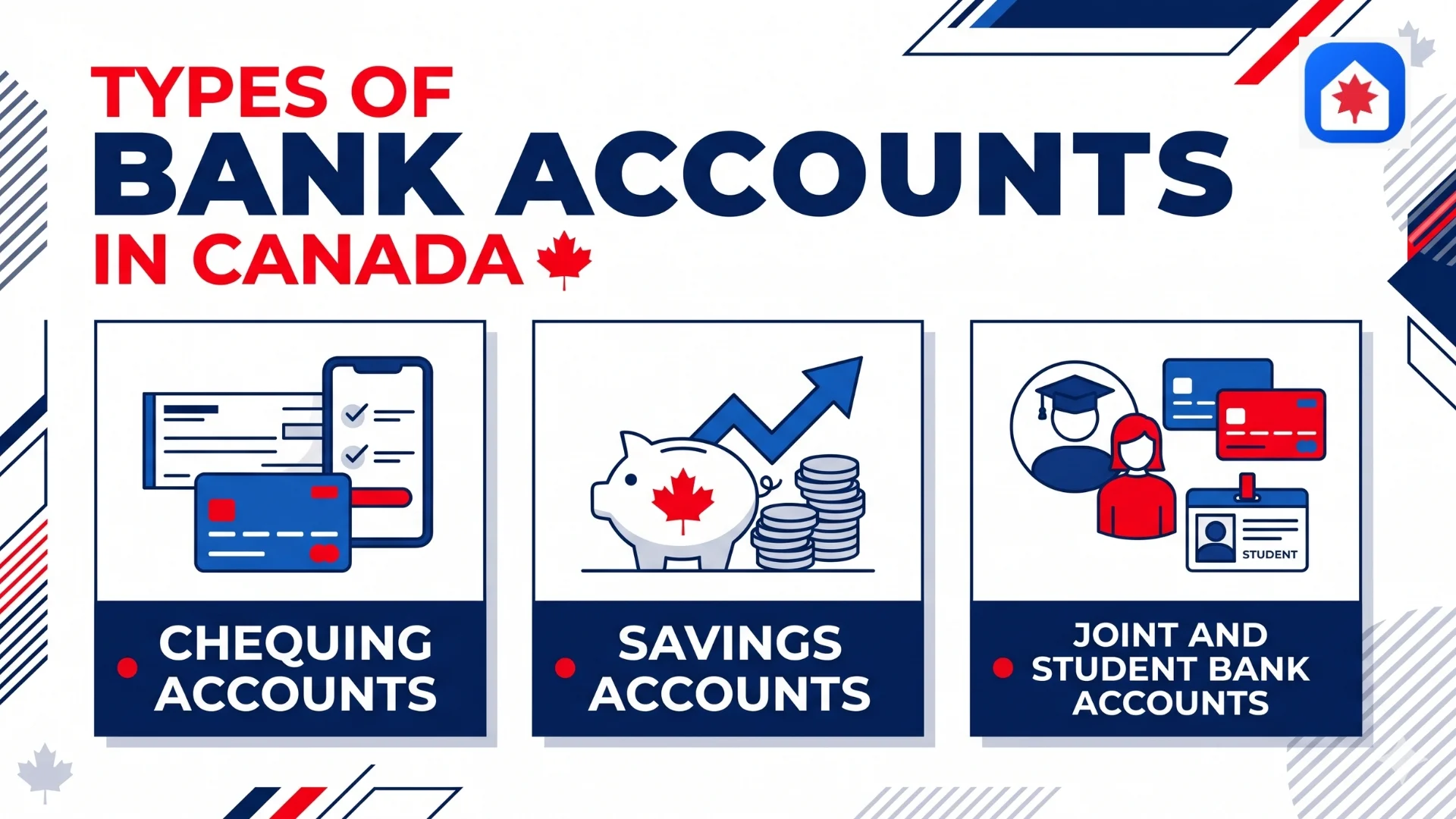
3. Types of Bank Accounts in Canada
Before choosing a financial institution, understand the main types of personal bank accounts available in Canada. The right choice depends on how you plan to use your money.
3.1. Chequing Accounts
A chequing account in Canada is designed for everyday banking. It is usually the first account newcomers open because it allows them to receive income and manage regular expenses.
Common features include:
- Receiving salary payments through direct deposit.
- Paying rent, utilities, and other bills.
- Making debit card purchases.
- Withdrawing cash from ATMs.
- Sending and receiving Interac e-Transfers.
- Setting up automatic payments.
Most chequing accounts offer convenient access to your money, but some charge monthly maintenance fees or limit the number of transactions included in the account. If you are new to Canada, compare these conditions before signing up.
3.2. Savings Accounts
A savings account is designed for money you don't need to spend regularly. Unlike a typical chequing account Canada, it may earn interest on your balance, helping you build an emergency fund or save toward future expenses.
However, interest rates and withdrawal conditions vary between financial institutions. Some savings accounts also offer fewer everyday banking features. A savings account can be useful alongside your chequing account rather than as a complete replacement.
3.3. Joint and Student Bank Accounts
Other account options may be more suitable depending on your circumstances.
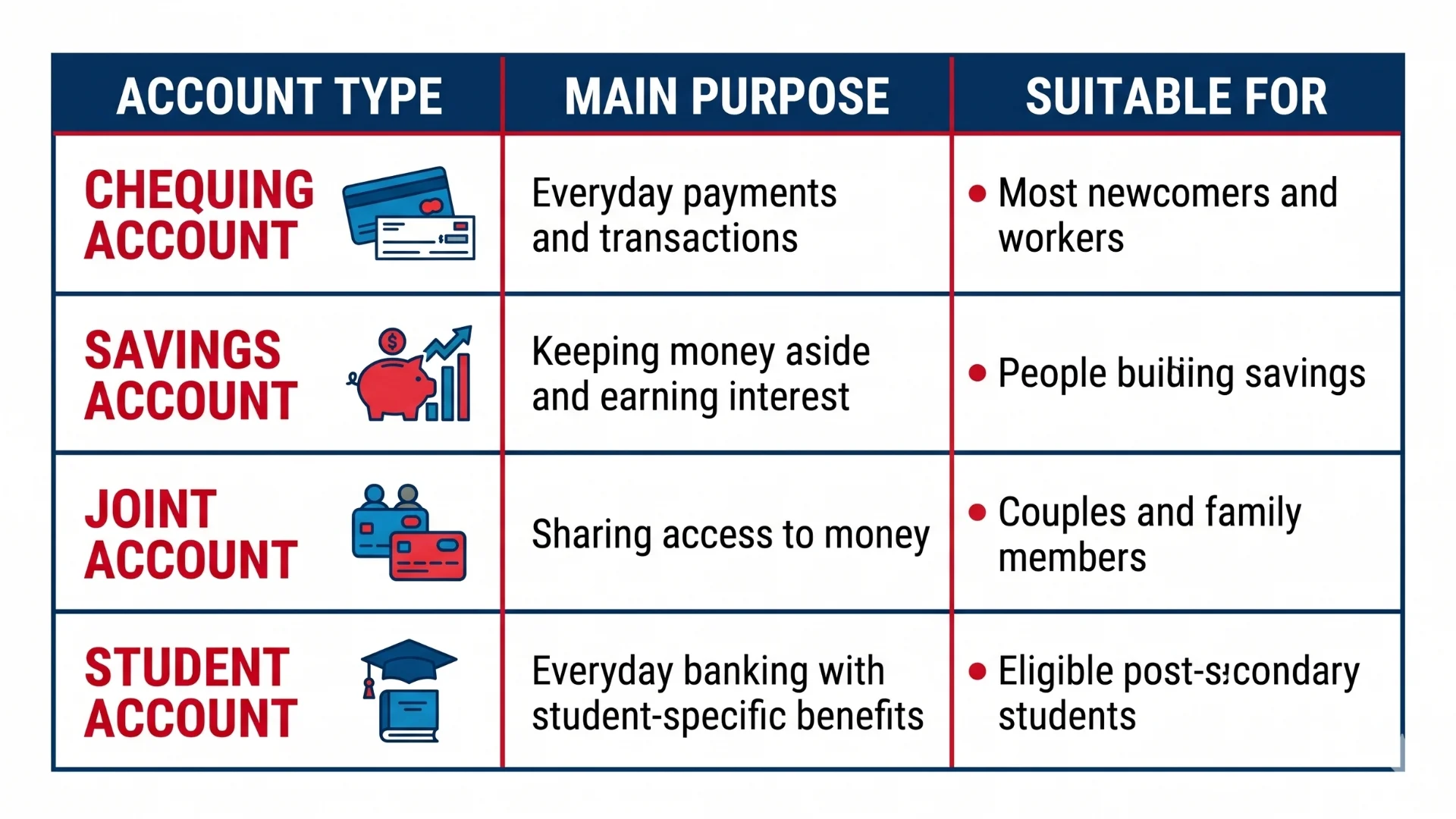
A student account may offer reduced or waived monthly fees, while a joint account allows two or more account holders to manage shared funds. Always check the eligibility conditions and account responsibilities before applying.
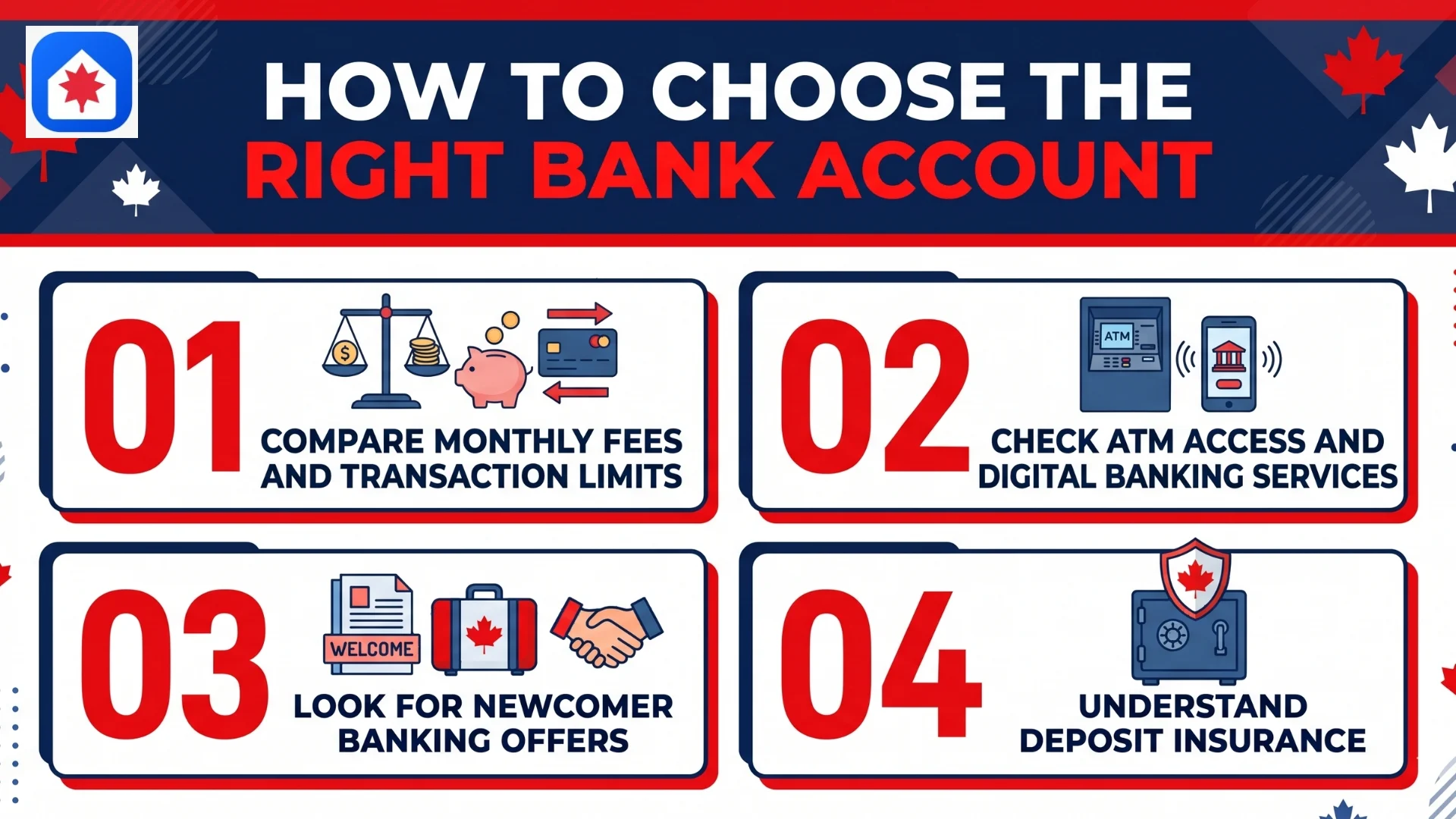
4. How to Choose the Right Bank Account
Choosing a bank is not just about finding the closest branch. You will also want to consider fees, account features, accessibility, and how easily you can manage your money. Here are some important factors to review.
4.1. Compare Monthly Fees and Transaction Limits
Some Canadian banks offer accounts with monthly maintenance fees, while others provide no-fee options.
Check:
- Monthly account maintenance fees.
- Number of included transactions.
- Additional transaction charges.
- Minimum balance requirements.
- Interac e-Transfer fees, if applicable.
A lower monthly fee doesn't always mean a cheaper account overall. If you frequently exceed transaction limits, additional charges can quickly add up.
4.2. Check ATM Access and Digital Banking Services
Consider how you prefer to manage your finances. If you regularly withdraw cash, choose a financial institution with convenient ATM access. If you prefer online banking, check whether its website and mobile app provide the features you need.
Useful features include:
- Mobile cheque deposits.
- Online bill payments.
- Interac e-Transfers.
- Automatic payment management.
- Account balance notifications.
- Two-factor authentication.
These services can make everyday banking easier, especially when you are still getting familiar with life in Canada.
4.3. Look for Newcomer Banking Offers
Several Canadian financial institutions provide special banking packages for newcomers.
Depending on the bank, these offers may include:
- Waived monthly account fees for a limited period.
- Free transactions.
- International money transfer benefits.
- Special savings or credit card offers.
- Access to newcomer financial support.
However, promotional offers often come with eligibility conditions and expiry dates. Read the terms carefully, particularly what happens when the promotional period ends. A package that is free during your first year may become a paid account afterward.
4.4. Understand Deposit Insurance
Deposit protection is another factor worth considering when choosing a bank. The Canada Deposit Insurance Corporation (CDIC) protects eligible deposits held at its member institutions if a member institution fails. Eligible deposits, including qualifying chequing and savings account balances, are generally insured up to $100,000 per deposit category, per member institution, including principal and interest.
Not every financial institution or financial product is covered. For example, mutual funds, stocks, bonds, and cryptocurrency are not eligible for CDIC deposit insurance. Before opening an account, check whether the institution is a CDIC member and whether your particular deposit qualifies.
5. How to Open a Bank Account in Canada: Step-by-Step
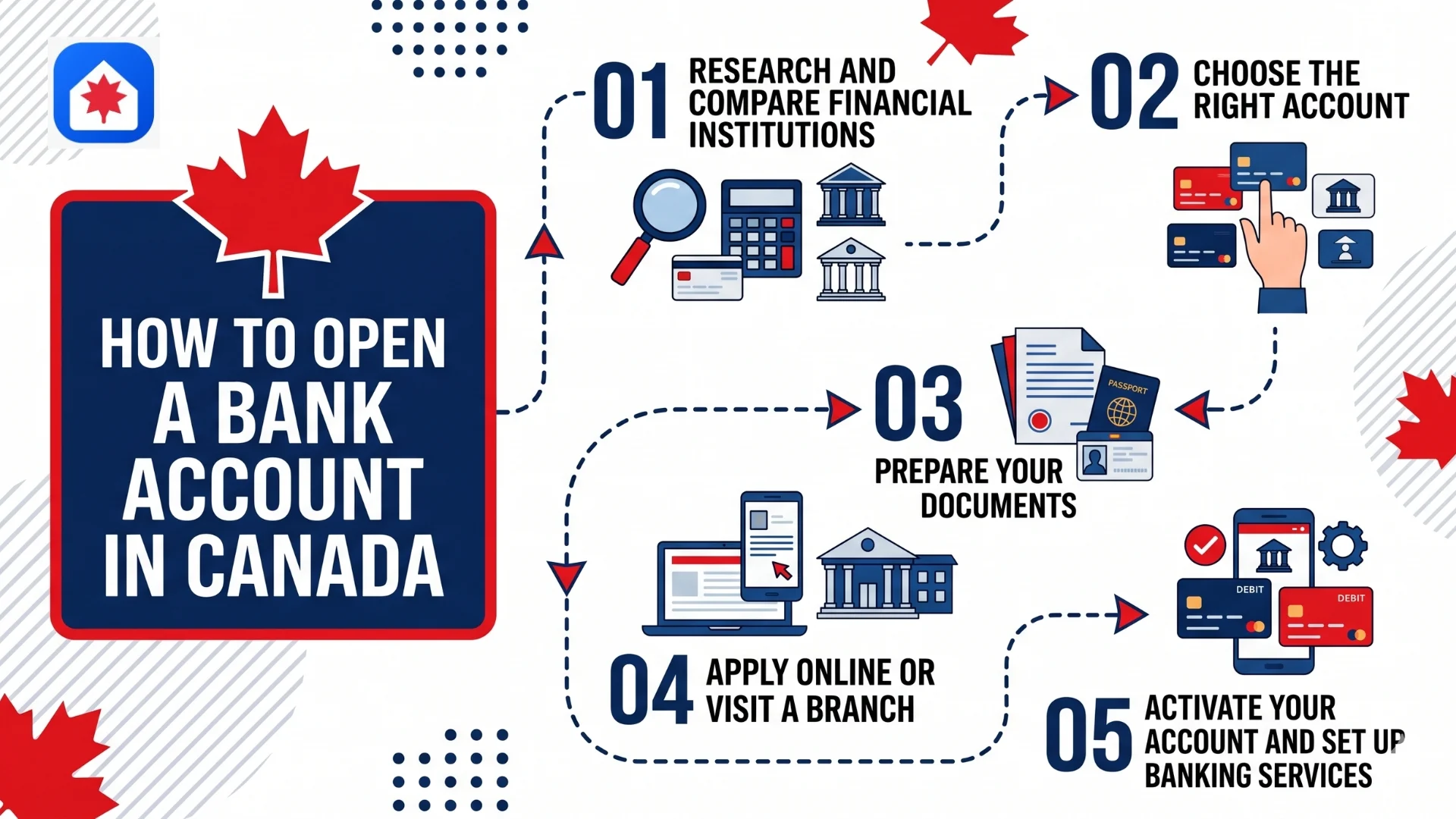
Once you have chosen a suitable financial institution, the application process is relatively straightforward. Here is how to open a bank account in Canada.
5.1. Research and Compare Financial Institutions
Start by comparing banks and other financial institutions that offer personal accounts.
Some well-known options in Canada include:
- RBC Royal Bank
- TD Canada Trust
- Scotiabank
- BMO Bank of Montreal
- CIBC
- National Bank
Compare their account fees, available services, newcomer programs, and eligibility requirements. Don't choose an account based solely on a welcome bonus. Consider whether its everyday features will continue to meet your needs after the promotion ends.
If you are unsure which institution to choose, explore our guide to the best banks for newcomers to Canada to compare banking options and find an account that suits your needs.
5.2. Choose the Right Account
Decide whether you need a chequing account, savings account, or both. For most newcomers, starting with a basic chequing account Canada is a practical choice because it allows you to receive income and pay everyday expenses. You can add a savings account later when you have a clearer idea of your monthly budget and financial goals.
5.3. Prepare Your Documents
Gather your identification documents and any additional paperwork requested by the bank.
Depending on your circumstances, you may need:
- Your original passport.
- Permanent Resident Card, work permit, or study permit.
- Proof of Canadian address, if requested.
- SIN, if required for the account or its income-reporting purposes.
- Proof of student enrolment, if applying for a student account.
Contact the financial institution before applying to confirm its accepted document combinations. This is particularly important if you are opening an account as a newcomer without a Canadian driver's licence or established proof of address.
5.4. Apply Online or Visit a Branch
Most traditional banks provide several ways to apply, depending on the account and your eligibility.
Applying online
Online applications can be convenient if you already have the required documents and can complete the bank's identity verification process.
You may need to:
- Visit the bank's official website.
- Select the account you want to open.
- Enter your personal information.
- Upload or submit the required documents.
- Complete identity verification.
Follow the bank's instructions to activate the account.
Applying in person
Visiting a branch is often a practical option for newcomers, especially if you are unfamiliar with Canadian banking requirements. A bank representative can explain the available accounts, review your identification documents, and help you complete the application. Bring your original documents and prepare questions about fees, transaction limits, and newcomers to Canada offers.
5.5. Activate Your Account and Set Up Banking Services
After your application is approved, the bank will provide the information needed to access your account.
Depending on the institution, this may include:
- Your account details.
- A debit card.
- A PIN.
- Online banking login information.
- Access to the bank's mobile app.
Follow the activation instructions and create a secure password. You can then set up direct deposits, automatic bill payments, and other services you need for everyday financial management.
6. What to Do After Opening Your Bank Account
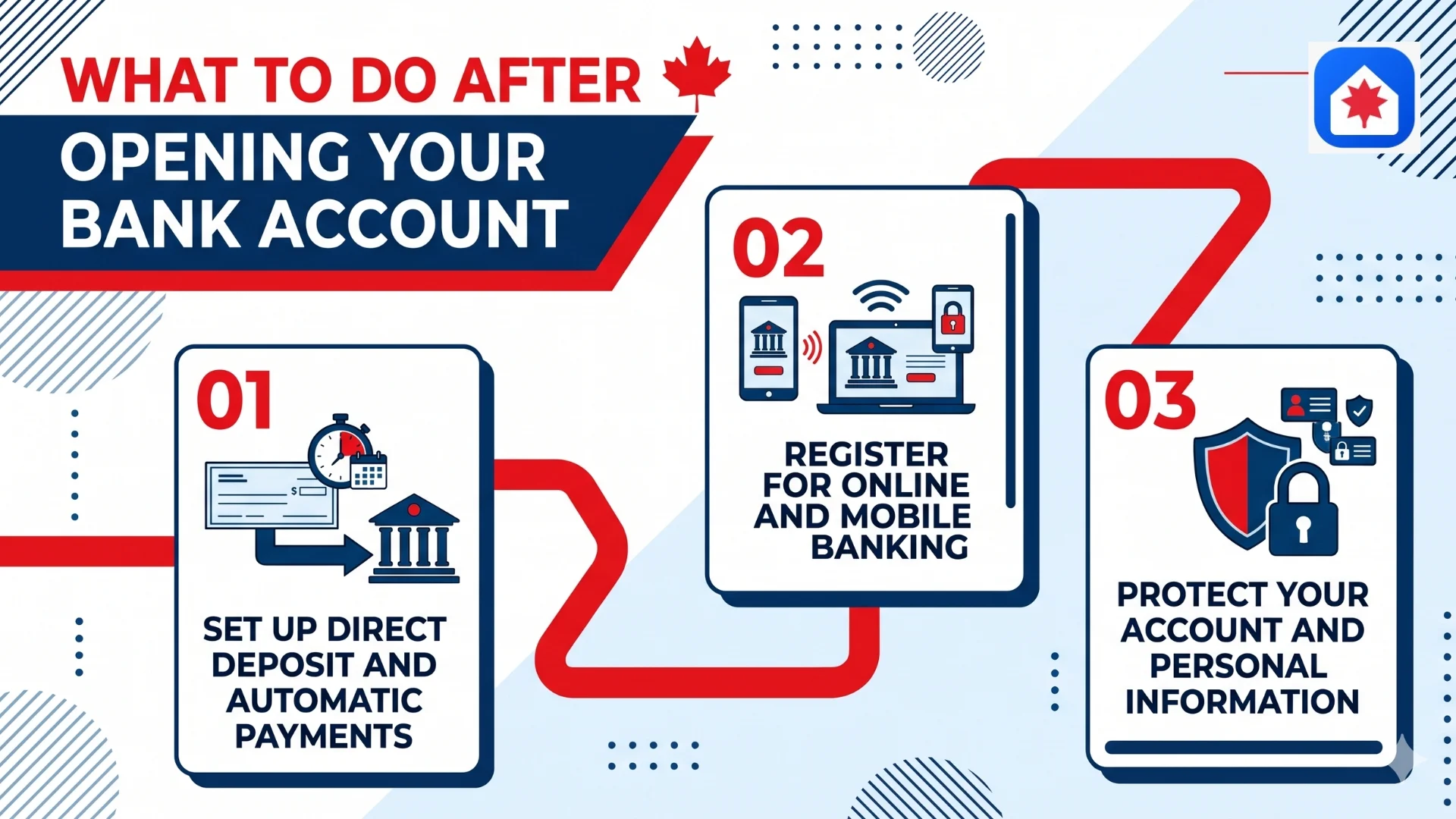
Opening an account is only the first step. You will also need to set it up properly so you can manage your money conveniently and securely.
6.1. Set Up Direct Deposit and Automatic Payments
If you are employed in Canada, you can provide your banking information to your employer to receive your salary through direct deposit.
You may also connect your account to recurring payments for:
- Rent, where the landlord accepts automatic payments.
- Electricity and other utility bills.
- Internet and mobile phone services.
- Insurance premiums.
- Subscription services.
Make sure you have enough money in your account before scheduled payments are processed to avoid declined transactions and potential fees.
6.2. Register for Online and Mobile Banking
Set up online banking as soon as your account is active.
Through your bank's website or mobile app, you can usually:
- Check your account balance.
- Review transaction history.
- Transfer money between accounts.
- Pay bills.
- Send Interac e-Transfers.
- Deposit eligible cheques.
Getting familiar with these features can make it easier to manage your finances without visiting a branch.
6.3. Protect Your Account and Personal Information
Financial security should be a priority, particularly when you are new to the Canadian banking system.
Follow these basic precautions:
- Use a strong, unique password for online banking.
- Enable two-factor authentication when available.
- Never share your PIN or banking password.
- Avoid accessing your account through public or unsecured Wi-Fi.
- Monitor transactions regularly.
- Contact your bank immediately if you notice suspicious activity.
You should also protect your SIN. Only provide it when legally required or when you understand why the institution needs it.
7. Common Mistakes to Avoid When Opening a Bank Account in Canada
Even though the application process is generally simple, newcomers can encounter unnecessary problems if they overlook important details. Here are some mistakes worth avoiding.
- Choosing an account without checking its fees: An account with a promotional offer may seem attractive initially, but monthly charges can increase after the offer expires. Always review the regular pricing and conditions.
- Assuming every bank accepts the same documents: Identification requirements can vary depending on your circumstances and the financial institution. Contact the bank before your appointment rather than assuming your documents will automatically be accepted.
- Thinking a SIN is always mandatory: A SIN is required for certain tax-reporting purposes, particularly when an account earns interest or other income. However, it is not a universal identification requirement for every basic banking transaction.
- Ignoring transaction limits: Some accounts include only a certain number of transactions each month. If you regularly exceed that limit, you may end up paying more than expected.
- Overlooking newcomer banking benefits: You may qualify for special account packages or reduced fees during your first year in Canada. Ask about these options before choosing a regular account.
- Sharing sensitive banking information: Never disclose your PIN, password, or one-time verification codes to anyone claiming to represent your bank. Use official communication channels whenever you need assistance.
Frequently Asked Questions
1. Can I open a bank account in Canada as a foreigner?
Yes. You don't have to be a Canadian citizen to open a personal bank account. Foreign nationals, permanent residents, international students, and temporary workers may qualify if they provide acceptable identification.
2. Can I open a bank account in Canada without a SIN?
Yes, you may be able to open a basic bank account without a SIN. However, financial institutions need your SIN for accounts or investments that earn reportable income, such as interest. Requirements may vary depending on the account you choose.
3. Can I open a bank account in Canada without proof of address?
Yes, it may be possible. Canada's identification rules provide an alternative method using one document showing your name and date of birth, together with confirmation of your identity by an eligible person. However, individual banks may have additional address requirements.
4. Can I open a bank account in Canada before I arrive?
Some Canadian banks allow newcomers to begin the application process before arriving. However, you may still need to visit a branch after landing to verify your identity and activate your account. Contact the bank to confirm its overseas application process.
5. Which type of bank account should newcomers choose?
A chequing account is usually a practical starting point because it supports everyday payments, salary deposits, debit card purchases, and bill payments. You can also open a savings account to keep emergency funds or money set aside for future expenses.
6. Can I open a bank account online in Canada?
Yes. Many Canadian financial institutions allow eligible customers to apply online. However, newcomers, non-residents, or applicants with documents that require additional verification may need to visit a branch to complete the process.
Understanding how to open a bank account in Canada is an important step toward managing your finances after moving to Canada. The process is generally straightforward once you understand the identification requirements, choose an account that suits your needs, and compare the associated fees. For most newcomers, starting with a basic chequing account is a practical way to handle everyday expenses and receive income. You can add a savings account later as your financial needs develop. Before applying, check the bank's latest requirements and newcomer offers to avoid unnecessary costs or delays.
For more practical information about settling in and managing everyday life in Canada, explore the resources available at CanadaHomeHub.