Buying or selling a home in Toronto involves more than finding the right property or agreeing on a price. You also need a real estate professional who understands the local market, communicates clearly, and can protect your interests throughout the transaction. With so many Toronto real estate agents offering different services and levels of experience, choosing the right one can feel overwhelming. So, this article is for you. We will explain how to find the best realtors in Toronto, verify their credentials, compare services and fees, and spot potential warning signs before you sign an agreement.
1. What Does a Realtor Do in Toronto?
A real estate professional helps buyers and sellers navigate property transactions, from initial research and property viewings to negotiations and closing. The two most common types of representation are buyer's agents and listing agents.
1.1. Buyer's Agent
A buyer's agent represents someone looking to purchase a property. Their role goes beyond arranging home viewings. They help buyers evaluate properties, understand market conditions, prepare offers, and negotiate purchase terms.
Typical responsibilities include:
- Understanding your requirements: Discussing your budget, preferred property type, location, and long-term plans.
- Finding suitable properties: Identifying homes that match your criteria and arranging viewings.
- Evaluating market value: Reviewing comparable properties and recent sales to help you assess asking prices.
- Preparing and negotiating offers: Advising on offer terms, conditions, deposits, and negotiation strategies.
- Supporting the transaction: Coordinating with mortgage professionals, home inspectors, and real estate lawyers when necessary.
A good buyer's agent should help you make informed decisions rather than pressure you into purchasing a property. A realtor for first-time buyers in Toronto should also be able to explain each step of the buying process, clarify unfamiliar terms, and help you understand the costs and responsibilities involved.
1.2. Listing Agent
A listing agent represents a homeowner who wants to sell a property. Their primary responsibility is to develop and execute a marketing and sales strategy to attract qualified buyers.
Their services may include:
- Property pricing: Reviewing comparable sales and current market conditions to recommend an appropriate listing price.
- Home preparation: Suggesting improvements, staging, photography, and other presentation strategies.
- Property marketing: Managing listing descriptions, photographs, virtual tours, advertising, and showing arrangements.
- Offer evaluation: Reviewing offers, explaining conditions, and assessing the financial and contractual terms.
- Negotiation and closing: Negotiating with potential buyers and coordinating the steps required to complete the sale.
When comparing listing agents, look beyond their promises to sell quickly or achieve a high price. Ask for evidence of their pricing strategy, recent transactions, and marketing approach.
2. How to Find the Best Realtors in Toronto
Finding a suitable realtor requires more than searching for the highest-rated professional online. Use several sources of information and compare candidates before making a decision.
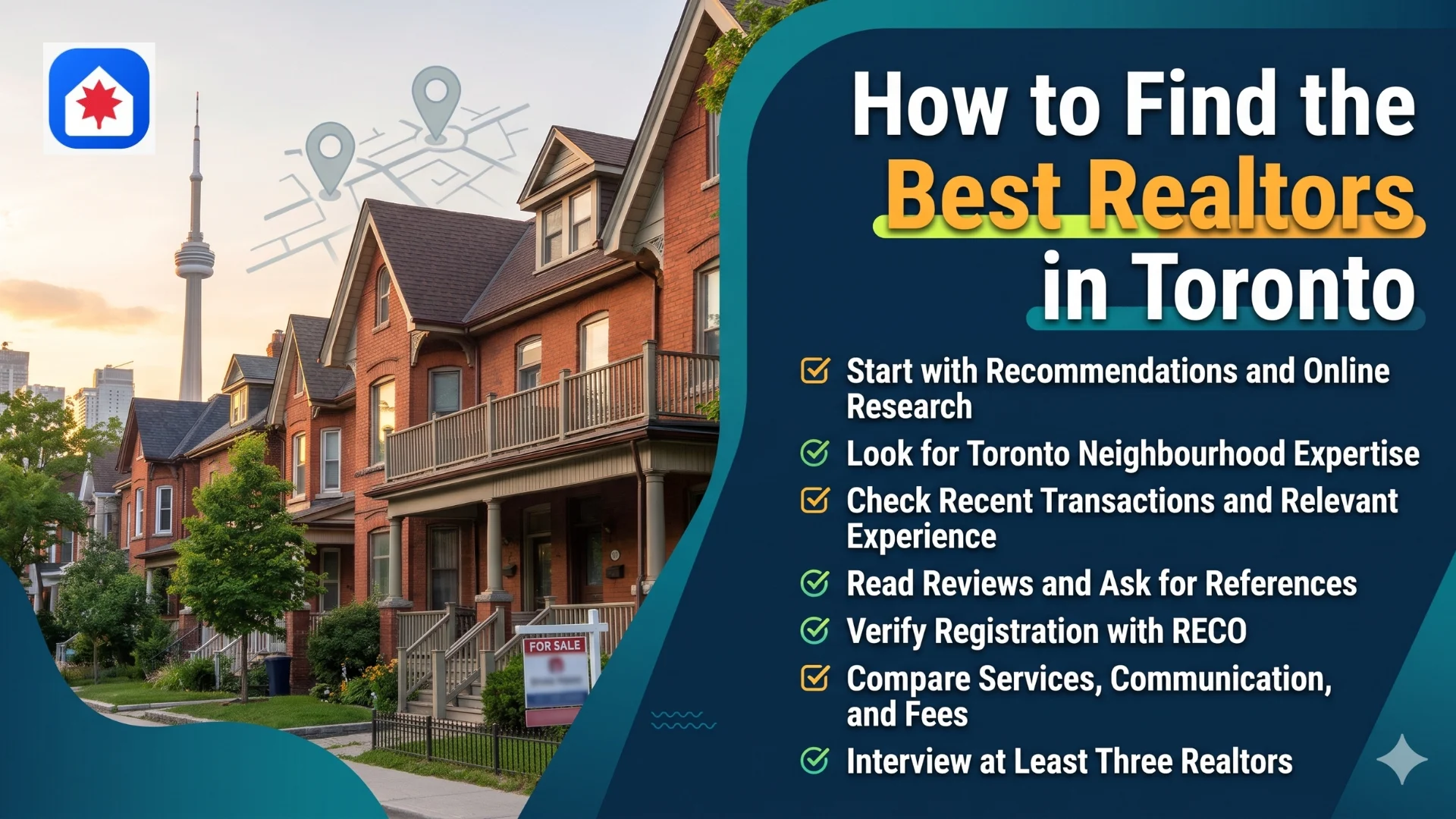
2.1. Start with Recommendations and Online Research
Personal recommendations are a useful starting point, particularly when they come from people who have recently bought or sold property in Toronto.
Ask friends, family members, colleagues, or local community groups about their experiences. Instead of simply asking whether they liked their realtor, find out what the professional actually did well.
For example:
- Did the realtor understand the client's budget and priorities?
- Were they responsive when questions or problems arose?
- Did they explain important documents and transaction conditions?
- Were their pricing recommendations realistic?
You can also search online for the best realtors in Toronto and review professional websites, brokerage profiles, and property-related platforms.
However, treat online rankings as a discovery tool rather than a definitive measure of quality. Some lists use different ranking methods, and their results may not reflect your specific needs.
2.2. Look for Toronto Neighbourhood Expertise
Toronto is a diverse real estate market, and property conditions can differ considerably between neighbourhoods. An agent who regularly works with downtown condos may have a different skill set from someone who specializes in detached homes in North York or family properties in Scarborough.
When evaluating local expertise, consider whether the realtor:
- Regularly handles transactions in your preferred neighbourhood.
- Understands local property values and recent comparable sales.
- Can explain differences between housing types and neighbourhood characteristics.
- Knows about relevant local considerations, such as transit access, school locations, zoning, and development activity.
- Can identify potential advantages and disadvantages of a property beyond its listing description.
For example, if you are considering a condominium in downtown Toronto, look for an agent familiar with condo fees, building management, status certificates, and the differences among buildings. For a detached home in a suburban neighbourhood, experience evaluating lot characteristics, property condition, and comparable detached-home sales may be more relevant.
Do not assume that an agent who works in Toronto generally has detailed knowledge of every neighbourhood. Ask about their recent activity in the exact areas where you plan to buy or sell.
2.3. Check Recent Transactions and Relevant Experience
An agent's transaction history can provide useful evidence of their practical experience. However, the total number of properties sold is not enough to determine whether someone is right for you. An agent with many transactions may primarily work in a different price range or property category.
Ask potential candidates about:
- The number of relevant transactions they have handled recently.
- Their experience with your preferred property type.
- Their familiarity with your target neighbourhood.
- Typical challenges they encounter during transactions.
- How they approach pricing, offers, and negotiations.
2.4. Read Reviews and Ask for References
Reading Toronto realtor reviews can help you understand how agents work with clients, particularly when multiple reviews describe similar experiences. Look beyond the overall star rating. Read the actual comments and pay attention to recurring details, such as:
- Responsiveness and communication.
- Knowledge of the local market.
- Transparency about costs and potential risks.
- Negotiation and problem-solving skills.
- Support during the closing process.
A realtor with a slightly lower average rating but detailed, relevant client feedback may be a better choice than someone with many short, generic five-star reviews.
2.5. Verify Registration with RECO
One of the most important steps when choosing the best realtors in Toronto is confirming their registration status. The Real Estate Council of Ontario (RECO) regulates real estate professionals in Ontario. Its public register allows consumers to search for registered salespersons, brokers, and brokerages.
You can use the official RECO Public Register to check:
- The agent's registered name and registration number.
- Their current registration status.
- Registration expiry information.
- Their brokerage and business contact details.
- Available enforcement and disciplinary information.
RECO's register also provides information about certain enforcement activities and disciplinary decisions within the previous five years. Before entering into a contractual relationship, confirm that the professional is registered and review any relevant regulatory history. A positive online reputation should never replace this verification.
2.6. Compare Services, Communication, and Fees
Not all real estate agents in Toronto provide the same combination of services. Some offer comprehensive support throughout the transaction, while others may focus on specific property types, locations, or client needs. Compare candidates based on what they actually include in their services.
Do not choose an agent solely because they offer the lowest commission or promise the highest selling price. Instead, consider whether the services and expertise justify the proposed cost.
2.7. Interview at Least Three Realtors
Once you have shortlisted several top realtors in Toronto, arrange individual consultations before hiring anyone. RECO recommends interviewing at least three agents so you can compare their experience, services, and approach. During these conversations, observe how they communicate and whether they take time to understand your circumstances.
A good realtor should ask questions about your budget, preferred location, timeline, and expectations rather than immediately pushing you toward a transaction. You can also ask each candidate to explain how they would approach your specific situation.
For example, if you are selling a property, compare their suggested listing prices, marketing plans, and explanations of comparable sales. If you are buying, ask how they would identify suitable properties, assess asking prices, and negotiate in competitive situations. The goal is not simply to find the most persuasive salesperson. It is to identify someone whose professional approach gives you confidence.
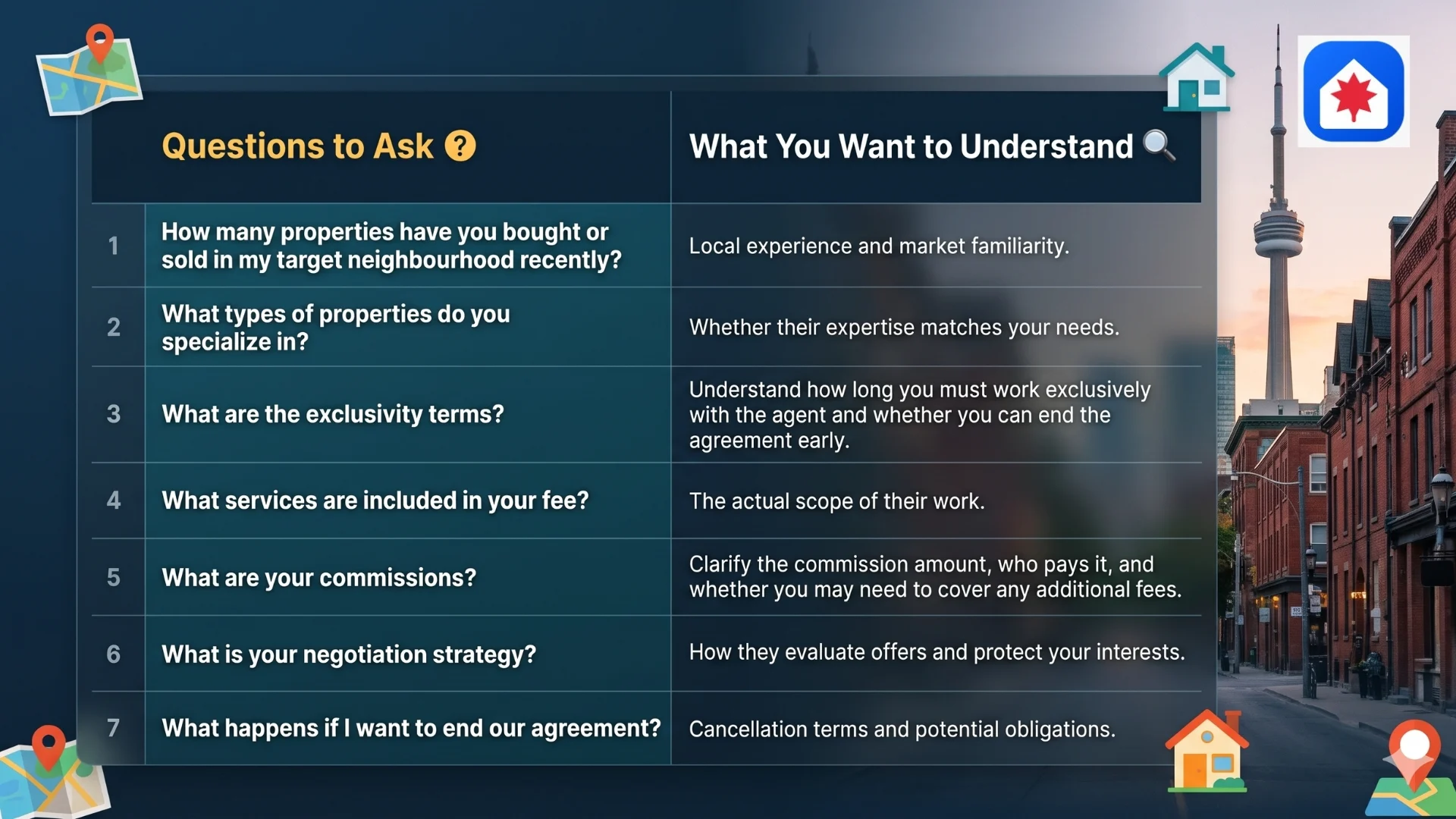
3. Questions to Ask Before Hiring a Realtor
An interview is a great chance to determine whether a realtor's experience, communication style, and services match your expectations. Rather than asking only general questions, focus on practical situations related to your transaction.
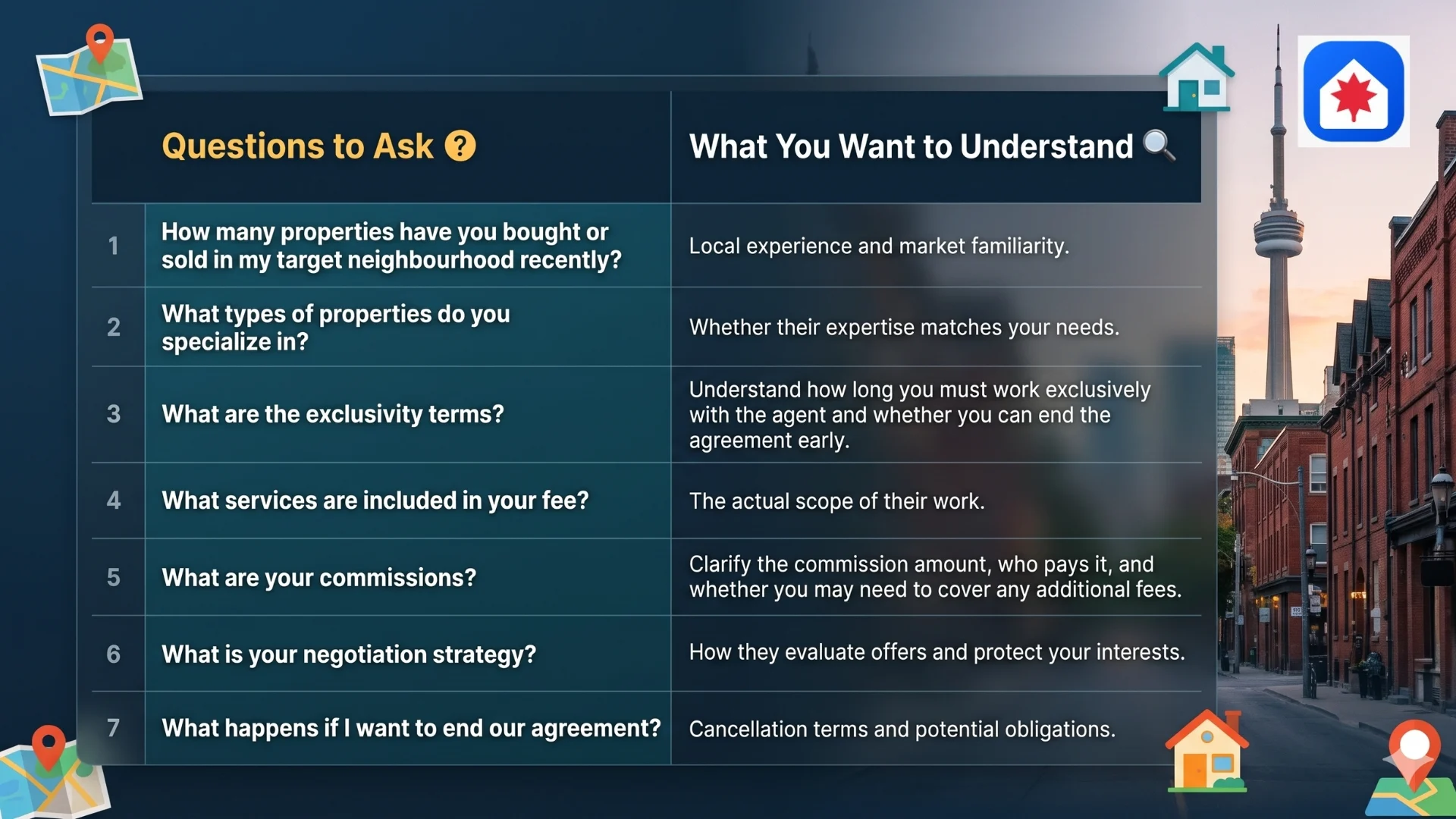
You should also ask for a sample representation agreement and take time to review its terms before signing. Pay particular attention to the duration, geographic scope, services, remuneration, and any conditions that could affect your ability to work with another agent. An experienced realtor should be comfortable answering these questions clearly.
4. Red Flags to Watch Out for When Choosing a Realtor
A realtor's marketing materials and sales promises do not necessarily reflect the quality of their professional service. Pay attention to the following warning signs when evaluating the best realtors in Toronto.
4.1. Unrealistic Pricing Promises
If a listing agent guarantees an exceptionally high selling price without supporting market evidence, ask how they reached that figure. Reliable pricing advice should be based on relevant comparable properties, market conditions, and the characteristics of your home.
4.2. Poor Communication
Repeatedly unanswered messages, unclear explanations, and inconsistent updates can become serious problems during time-sensitive transactions. If an agent is difficult to reach before you sign an agreement, consider how they might communicate when negotiations become more complicated.
4.3. Pressure to Sign Immediately
A professional should give you enough time to understand the agreement and ask questions. Be cautious if someone pressures you into signing a long-term representation agreement without explaining its scope, fees, or cancellation conditions.
4.4. Lack of Transparency About Fees
Avoid agents who cannot clearly explain their remuneration or who rely on vague verbal promises about commission arrangements. All important financial terms should be properly documented.
4.5. Limited Relevant Experience
An agent may have an impressive overall transaction history but little experience with your preferred neighbourhood or property type. Ask for relevant examples rather than relying on broad claims about their success.
4.6. Unclear Representation and Conflicts of Interest
If the same brokerage or representative is involved with multiple clients in one transaction, multiple representation rules may apply. This situation can affect the advice and services available to each client. Ask the agent to explain the arrangement, its implications, and your options before agreeing.
5. How CanadaHomeHub Can Help You Prepare for Your Toronto Home Search
Choosing a realtor is only one part of preparing for a successful property transaction. You should also understand your financial position before starting conversations with real estate professionals. CanadaHomeHub provides Canadian housing and financial tools that can help you prepare for the buying process.
Its home-buying and financing calculators include:
- Mortgage Payment Calculator: Estimate monthly or biweekly mortgage payments and total interest.
- Home Affordability Calculator: Assess a potential purchase budget based on income, debts, and Canadian mortgage affordability criteria.
- Down Payment and CMHC Calculator: Estimate minimum down payment requirements and potential mortgage default insurance premiums.
- Closing Cost Calculator: Estimate the cash expenses required to finalize your home purchase.
These tools can help you develop a clearer financial plan before discussing your requirements with a realtor. CanadaHomeHub also provides a Canadian professional directory to help you find the right support for your next step, including realtors. Check the current availability of listings and independently verify credentials with the relevant regulator before engaging anyone.
The calculators and directory are starting points for research, not substitutes for personalized financial or legal advice.
Frequently Asked Questions
1. How do I find a good realtor in Toronto?
Start by asking for personal recommendations and researching real estate professionals online. Shortlist several candidates, compare their recent transactions and neighbourhood expertise, read client reviews, and verify their registration with RECO. Interview at least three agents before making a decision.
2. How do I check if a realtor is licensed in Ontario?
Visit the RECO Public Register and search for the individual's name or registration number. Confirm that their registration is current and review any available enforcement or disciplinary information.
3. What is the difference between a realtor and a real estate broker?
In Ontario, a real estate broker is a professional who has completed additional education and met RECO's broker registration requirements. Brokers may also supervise salespersons at their brokerage. A realtor is a licensed real estate professional who is a member of the Canadian Real Estate Association (CREA). These are not mutually exclusive titles: a broker can also be a realtor.
4. Do buyers have to pay realtor commission in Toronto?
Buyers should review their buyer representation agreement to understand their financial obligations. The agreement determines the remuneration payable to their brokerage. A seller may offer to cover some or all of that amount, but buyers should not assume that the seller will automatically pay the entire fee.
5. Can I change my realtor after signing an agreement?
It depends on the terms of your representation agreement. Review its expiry date, cancellation provisions, and any financial obligations that may continue after termination.
Finding the best realtors in Toronto is about identifying a professional who understands your property goals, knows the local market, and provides transparent guidance throughout the transaction. Before making your decision, compare at least three candidates, review their recent transactions, check client feedback, and verify their registration with RECO. Most importantly, understand the services, fees, and obligations outlined in your representation agreement before signing. By taking time to evaluate your options and prepare your finances, you can approach the Toronto real estate market with greater confidence.
Thank you for taking the time to read this article.
For more information, please contact us at CANADAHOMEHUB.