Buying or selling a property is among the most significant financial and emotional milestones in a person's life. In Canada's complex, highly regulated, and fast-moving real estate environment—ranging from the high-density markets of Metro Vancouver and the Greater Toronto Area (GTA) to rapidly growing urban centers like Calgary, Edmonton, and Halifax - navigating a property transaction without expert guidance can lead to costly pitfalls and legal complications.
Whether you are a first-time homebuyer trying to break into the market or a seasoned homeowner planning to sell and upgrade, partnering with a trusted real estate agent Canada can make a world of difference. This comprehensive guide walks you through every essential aspect of the process, including how representation works, a detailed breakdown of realtor fees Canada, actionable steps on how to find a realtor Canada, critical interview questions, and key red flags to avoid.
Real Estate in Canada: Industry Roles & Terminology
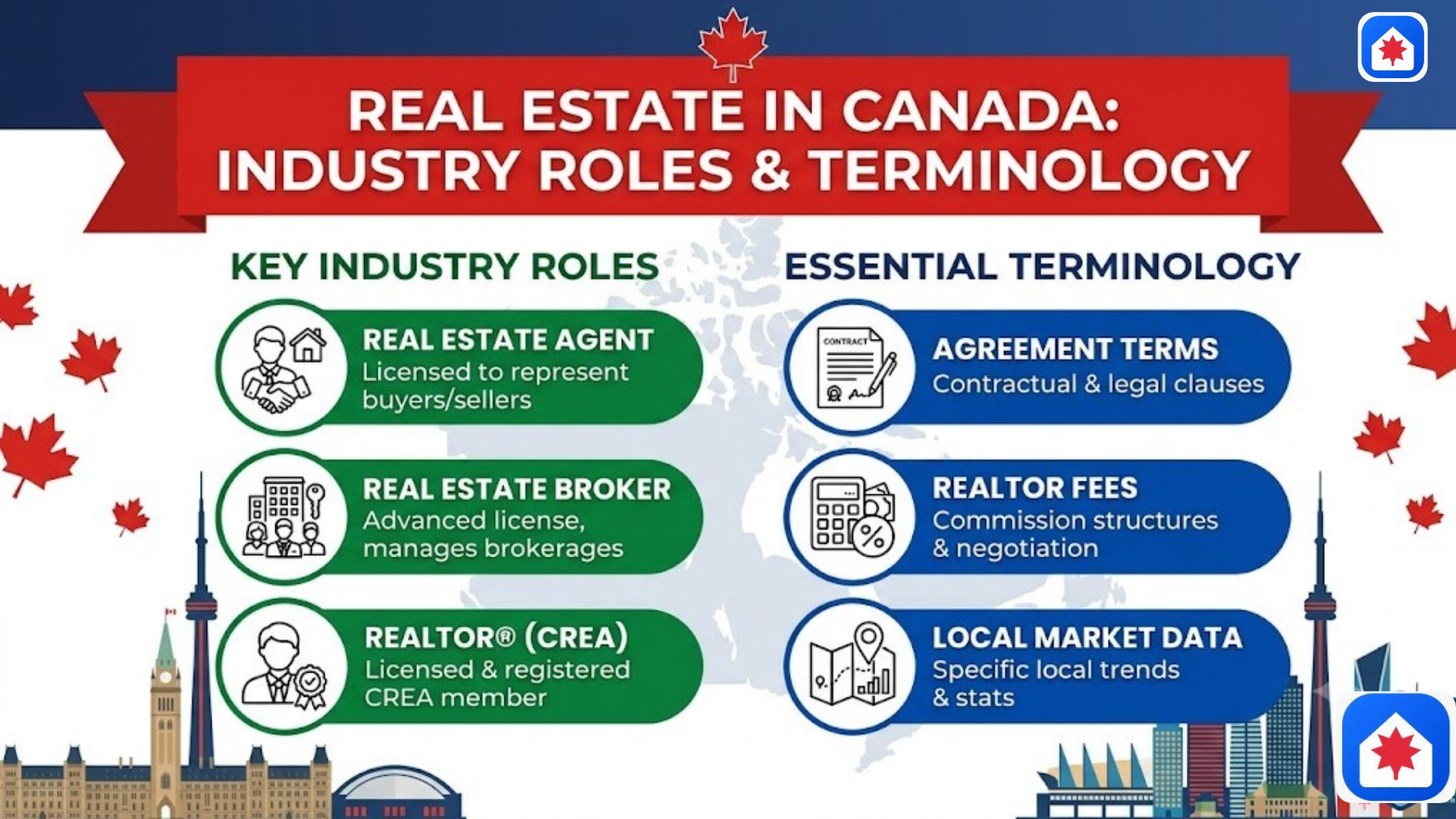
Before embarking on your search, it is essential to understand the professional landscape and terminology used across Canadian real estate markets. While many people use terms like "agent" and "realtor" interchangeably, key professional distinctions exist:
- Real Estate Agent: A licensed professional who has completed required provincial education and training to represent buyers or sellers in real estate transactions. Real estate licensing is regulated at the provincial level—such as by the Real Estate Council of Ontario (RECO), the British Columbia Financial Services Authority (BCFSA), or the Real Estate Council of Alberta (RECA).
- Real Estate Broker: A professional who has undertaken advanced real estate education and meets additional experience requirements. Brokers are licensed to manage real estate brokerages and oversee other agents.
- Realtor®: A licensed real estate agent or broker who is a registered member of the Canadian Real Estate Association (CREA) and their local real estate board. Members of CREA must adhere to a strict Code of Ethics and professional standards. When looking for a certified realtor Canada, you are choosing a professional committed to CREA's national standards.
Why Professional Representation Matters
While some buyers and sellers consider handling transactions on their own through "For Sale By Owner" (FSBO) arrangements, self-representation carries significant legal and financial risks. A dedicated real estate agent Canada provides several crucial advantages:
- Deep Local Market Intelligence: Real estate trends vary significantly from province to province and neighborhood to neighborhood. A qualified agent leverages historical market data and active Multiple Listing Service (MLS®) tools to deliver precise Comparative Market Analysis (CMA) reports.
- Contractual and Legal Protection: Standard Canadian real estate documents—such as Agreements of Purchase and Sale, status certificate clauses for condominiums, and financing or inspection contingencies—are legally binding contracts. An experienced professional ensures your rights and deposit are fully protected.
- Strategic Negotiation: Buying or selling property involves intense negotiations regarding purchase price, closing dates, included fixtures, and repair conditions. A professional agent provides objective, unemotional representation to secure the best terms possible.
Understanding Realtor Fees in Canada
A major concern for buyers and sellers alike involves financial costs and compensation. Having complete transparency surrounding realtor fees Canada helps you budget effectively and avoid surprises at closing.
How Commission Structures Work
In Canada, real estate commission is typically structured as a percentage of the final sale price of the property. In the vast majority of traditional transactions, the seller pays the total real estate commission, which is then divided between the listing brokerage (representing the seller) and the co-operating brokerage (representing the buyer).
- For Home Sellers: When listing your home, you sign a listing agreement specifying the total agreed-upon commission rate. This rate covers both the marketing and services of your listing team as well as the compensation offered to the buyer's agent.
- For Homebuyers: In standard transactions, homebuyers do not pay their agent directly out of pocket. The buyer agent's fee is funded from the total commission paid by the seller upon closing. However, buyers sign a Representation Agreement that outlines the scope of service and commission terms.
Regional Variations Across Canadian Provinces
Commission structures are not nationally uniform; they vary by region and property market:
- Flat Percentage Model (Common in Ontario & Quebec): Commission is typically calculated as a single percentage of the total purchase price (often ranging between 3.5% and 5% plus taxes, split between both brokerages).
- Tiered Percentage Model (Common in British Columbia & Alberta): Commissions are often structured on a sliding scale—for instance, 7% on the first $100,000 of the sale price and 2.5% to 3% on the remaining balance.
Taxes on Commission
Real estate commissions in Canada are subject to federal and provincial sales taxes based on the location of the transaction:
- GST (5%): Applicable in provinces like Alberta, British Columbia, Saskatchewan, and Manitoba.
- HST (13% to 15%): Applicable in Ontario (13%) and Atlantic provinces such as Nova Scotia, New Brunswick, and Newfoundland & Labrador (15%).
Important Legal Note: Under Canada’s Competition Act, real estate commissions are fully negotiable. There are no legally mandated or standard fixed commission rates in Canada. Real estate brokerages set their own fee structures independently.
How to Find a Realtor in Canada: A Step-by-Step Guide
Finding the ideal professional requires a structured approach. Follow this practical 4-step framework to identify and hire the right candidate for your specific needs.
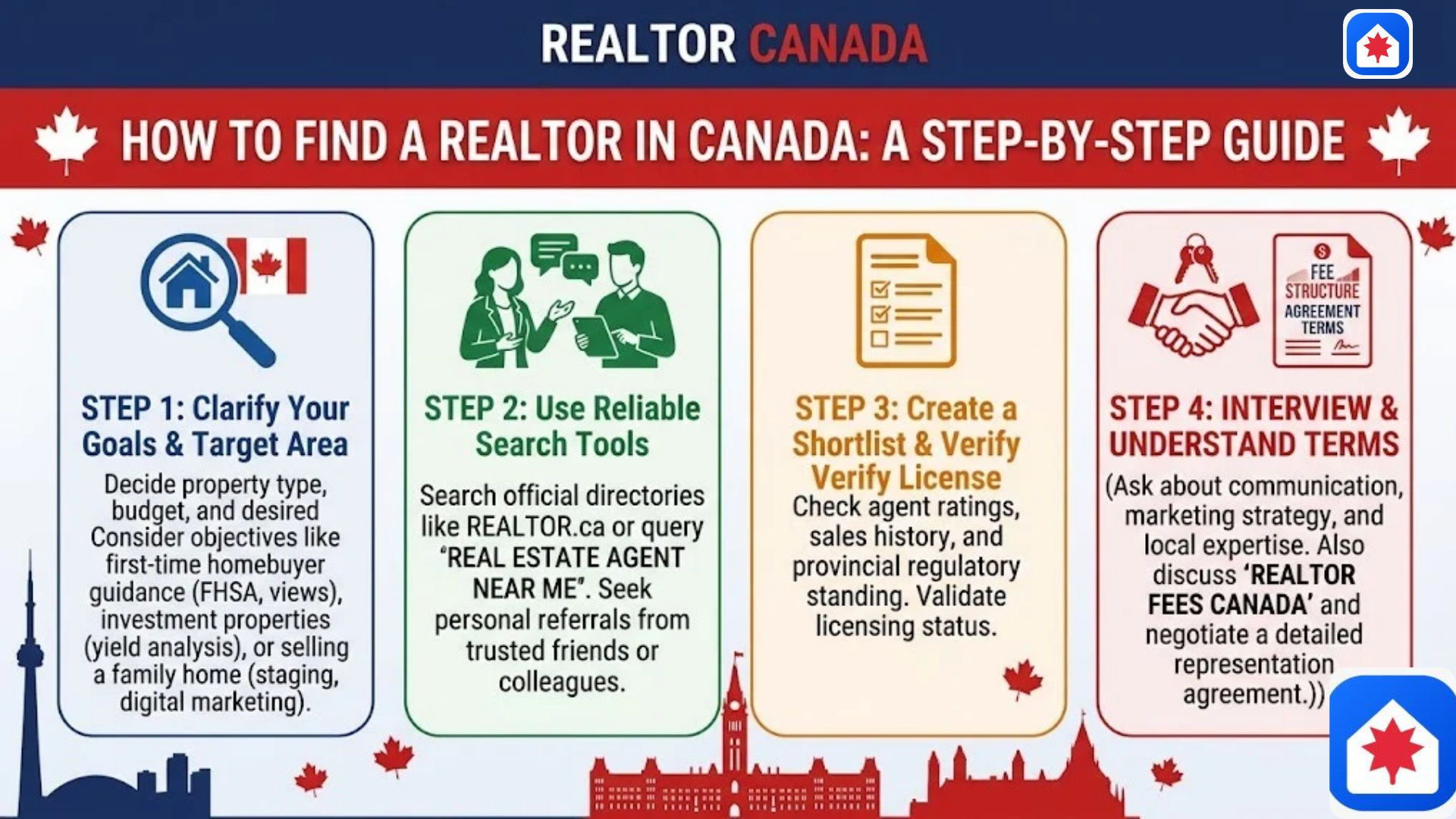
Step 1: Define Your Specific Property Requirements
Before searching for an agent, clarify your primary objectives:
- Are you a first-time homebuyer needing guidance through mortgage pre-approvals, government incentives (like the First Home Savings Account - FHSA), and property viewings?
- Are you looking to purchase an investment property requiring detailed rental yield analysis and tenant awareness?
- Are you selling a family home requiring staging, professional media, and targeted digital marketing?
Different agents specialize in different niches—such as downtown condominiums, suburban detached homes, rural properties, or commercial real estate.
Step 2: Utilize Verified Search Channels
When researching how to find a realtor Canada, leverage reliable channels:
- REALTOR.ca Directory: The official platform owned by CREA allows you to search for active, licensed professionals by city, neighborhood, language spoken, and area of specialty.
- Local Search Queries: Performing a localized search for a real estate agent near me helps identify active agents operating right in your immediate community. Examine their Google Business profiles, client ratings, and localized search presence.
- Personal Referrals: Seek recommendations from friends, family members, or colleagues who have recently completed a successful real estate transaction in your desired city or neighborhood. Personal experiences offer valuable insights into an agent's communication style and integrity.
Step 3: Create a Shortlist of Candidates
Compile a shortlist of 3 to 5 potential agents. Research each candidate’s online footprint:
- Check their active property listings and recent sales history.
- Read authentic client reviews across third-party platforms.
- Verify their licensing status through your provincial real estate regulator's public register.
Step 4: Conduct Thorough Interviews
Never sign a representation agreement with the first professional you meet. Schedule dedicated consultation meetings (either in person or via video call) to interview your shortlisted candidates.
7 Essential Questions to Ask During Your Interviews
To evaluate an agent’s expertise, transparency, and compatibility with your goals, ask these seven targeted questions:
1. "How long have you been active in this specific neighborhood?"
-
Why it matters: Hyper-local experience is invaluable. An agent who actively trades in your target street or neighborhood understands micro-market pricing trends, school catchments, upcoming municipal developments, and neighborhood buyer demographics.
2. "Can you provide recent sales stats and client references?"
-
Why it matters: Past performance is a strong indicator of competence. Request references from recent buyers or sellers in your price bracket and follow up with those clients to ask about their experience.
3. "What is your full marketing strategy for listing my property?" (For Sellers)
-
Why it matters: Simply listing a home on the MLS® is no longer enough. Top-tier agents invest in professional photography, 3D virtual tours, floor plans, professional home staging consultations, and targeted social media advertising campaigns.
4. "How do you help buyers navigate competitive bidding wars?" (For Buyers)
-
Why it matters: In tight Canadian housing markets, multiple-offer scenarios are common. Your agent should have proven strategies for structuring competitive offers—such as flexible closing dates, pre-inspection strategies, and firm financing arrangements—without overpaying.
5. "What is your communication schedule and preferred medium?"
-
Why it matters: Clear communication eliminates stress. Confirm whether your agent will communicate primarily via phone, text, or email, and establish expectations regarding updates after open houses or showings.
6. "Do you work full-time or part-time in real estate?"
-
Why it matters: Real estate is a fast-paced field requiring constant availability. Full-time agents are generally better equipped to handle time-sensitive negotiations and sudden showing opportunities.
7. "Can you explain the terms of your Representation Agreement and termination policy?"
-
Why it matters: Before signing a Buyer Representation Agreement (BRA) or Listing Agreement, understand the duration of the contract, territorial scope, commission terms, and conditions under which you can cancel if the relationship is not working out.
Critical Red Flags to Watch Out For
While the vast majority of real estate professionals operate ethically, buyers and sellers should remain vigilant against common red flags:
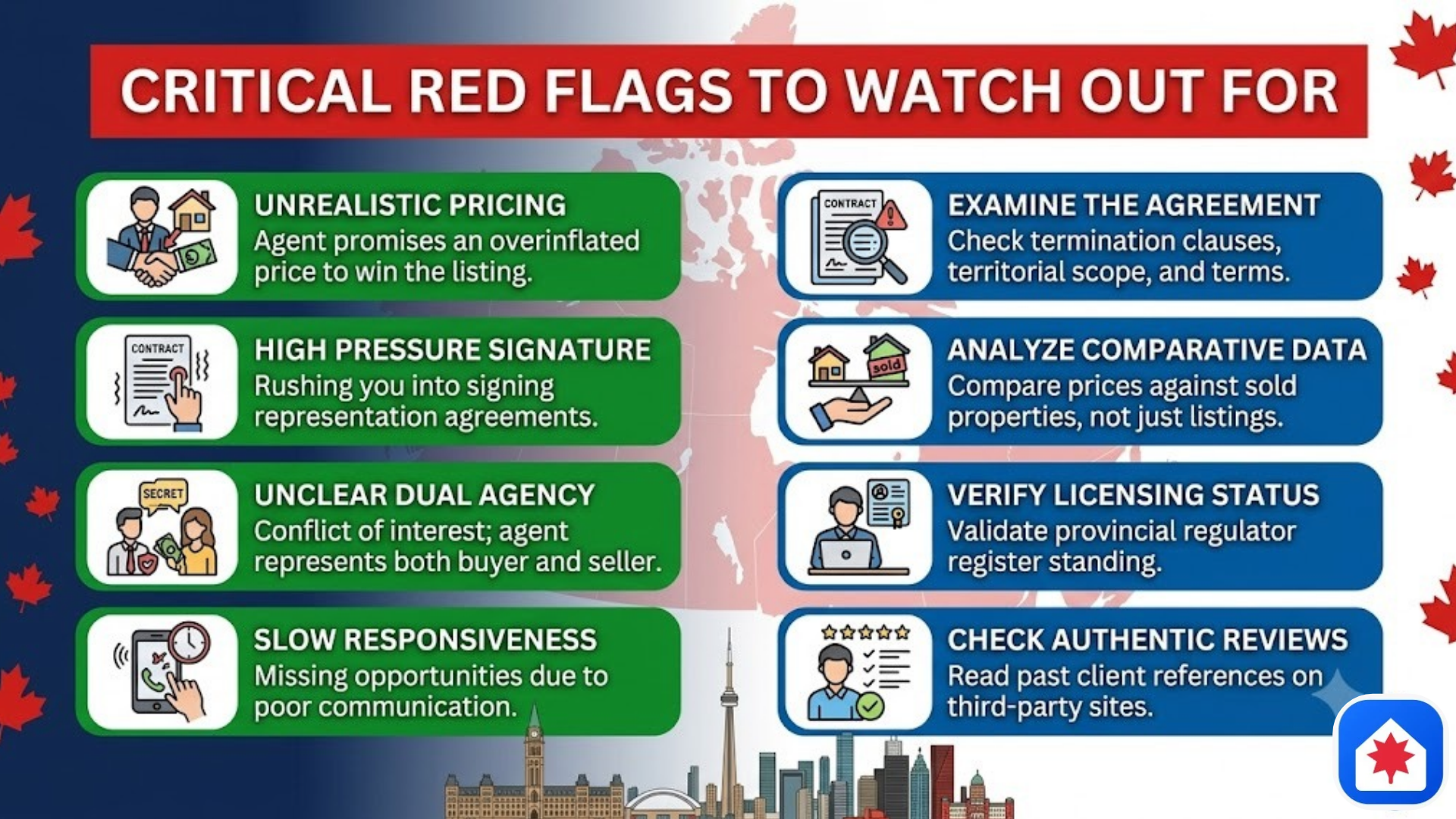
- "Buying the Listing" (Overpromising Price): Be cautious of an agent who suggests a listing price significantly higher than all other market estimates just to win your business. Overpriced properties often sit on the market for months, eventually selling for less than their actual market value after multiple price reductions.
- High-Pressure Signature Tactics: Avoid agents who pressure you to sign long-term, binding representation agreements during your very first meeting without giving you time to review the clauses carefully.
- Unclear Conflict of Interest Disclosures: Be cautious when dealing with dual agency situations (where one agent or brokerage represents both the buyer and seller in the same transaction). Certain provinces, such as British Columbia, have strictly limited or banned dual agency to protect consumer interests.
- Delayed Responsiveness: If an agent takes days to reply to your initial inquiry, they may lack the bandwidth to manage time-sensitive offer deadlines and contract amendments later in the process.
Key Takeaways and Actionable Summary Checklist
Partnering with a skilled, ethical real estate agent Canada is one of the best investments you can make when buying or selling real estate. By taking an informed, proactive approach to selection, you ensure your real estate journey is profitable, smooth, and secure.
Actionable Summary Checklist:
-
Determine Goals: Define your budget, desired location, timeline, and property preferences.
- Research Fees: Understand local commission structures and regional tax requirements (realtor fees Canada).
- Locate Candidates: Search using CREA’s REALTOR.ca registry, personal referrals, and local queries for a real estate agent near me.
- Vet & Shortlist: Verify provincial licensing status and review client testimonials for 3 to 5 agents.
- Interview Thoroughly: Use the 7 critical interview questions to assess local experience and strategy (how to find a realtor Canada).
- Review Contracts: Carefully examine representation agreements, termination clauses, and commission terms before signing.

By taking these structured steps, you can confidently choose a top-performing realtor Canada who will represent your financial interests and guide you home.
Thank you for reading our article!