Buying a home is a major financial decision that goes beyond finding a property you like. If you are planning home buying in Canada, you need to understand your eligibility, calculate how much you can afford, prepare for upfront expenses, and navigate the legal steps involved in purchasing a property. The process can vary depending on your financial situation, the province or territory where you plan to buy, and the type of property you choose. This guide explains the key decisions and practical steps involved in buying a home in Canada so you can prepare your finances, evaluate your options, and avoid common mistakes.
1. Should You Buy a Home or Continue Renting?
Buying and renting both have pros and cons. The right choice depends on your finances, lifestyle, and how long you expect to stay in one place.
Buying a home can provide long-term stability and allow you to build equity as you repay your mortgage. You may also have more freedom to customize your living space. However, homeownership requires a substantial upfront investment and makes you responsible for property taxes, insurance, maintenance, and unexpected repairs.
Renting generally requires less money upfront and offers greater flexibility if you may relocate for work, education, or personal reasons. Renters also typically have fewer direct maintenance responsibilities.
Before deciding, consider these questions:
- How long do you plan to stay?
- Is your income stable?
- Do you have enough savings?
- Can you handle unexpected expenses?
Compare the total cost of buying with the cost of renting rather than looking at mortgage payments alone. Home buying in Canada may be a suitable choice when you have sufficient financial flexibility and a clear plan for the future, but renting can remain the more practical option in some cases.
2. Who Is Eligible to Buy Property in Canada?
Before searching for a home, confirm that you are legally allowed to purchase the type of property you want. Eligibility can depend on your citizenship or immigration status, the property's location and classification, and applicable federal, provincial, or municipal rules.
Canadian citizens and permanent residents
Canadian citizens and permanent residents are generally not subject to the federal prohibition on purchases by non-Canadians. However, they must still comply with applicable property laws, tax requirements, and other regulations. They also need to qualify for financing if they intend to use a mortgage. Being legally eligible to purchase a home does not guarantee that a lender will approve the loan.
Temporary residents and other foreign buyers
Canada's Prohibition on the Purchase of Residential Property by Non-Canadians Act restricts many non-Canadians from purchasing residential property covered by the law. The federal prohibition is currently scheduled to remain in effect until January 1, 2027. Certain exceptions apply, but holding a visa, study permit, or work permit does not automatically make someone eligible to buy a home.
For example, some work permit holders may qualify for an exception if they meet specific conditions relating to their work authorization and previous property purchases. Certain international students may also qualify, but the exception includes requirements concerning physical presence, tax filings, purchase price, and the number of properties purchased.
The rules are detailed, and eligibility depends on the buyer's circumstances and the property involved. If you are not a Canadian citizen or permanent resident, take these steps before making an offer:
- Check whether the federal prohibition applies to you and whether you qualify for an exception.
- Confirm whether the property falls within the scope of the restrictions.
- Investigate any additional provincial or municipal taxes or requirements.
- Consult a qualified real estate lawyer before signing a purchase agreement or paying a deposit.
If you are considering buying property in Canada, make sure you understand the eligibility requirements and any restrictions that may apply to your situation before making an offer. If you need professional guidance, explore the CanadaHomeHub professional directory to find experts who can help you navigate the home-buying process.
3. What Types of Properties Can You Buy in Canada?
The type of property you choose affects the purchase price, maintenance responsibilities, monthly expenses, and level of privacy you can expect.
- Detached houses: Standalone homes that generally offer more privacy and outdoor space. Owners are usually responsible for maintaining the building, yard, and other parts of the property.
- Semi-detached houses: Homes that share one wall with a neighbouring property. They can offer a balance between privacy and affordability, depending on the location.
- Townhouses: Homes connected to neighbouring units. Some are freehold properties, while others are part of a condominium arrangement, so ownership responsibilities and fees can differ.
- Condominiums (condos): Individually owned units in buildings or complexes with shared spaces and facilities. Owners generally pay condo fees and must follow the applicable condominium rules.
When comparing properties, look beyond the listing price. A less expensive home may need significant repairs, while a condo may come with substantial monthly fees or potential special assessments. Consider your budget, household size, commute, preferred location, and willingness to handle maintenance. These factors can help you narrow your search to properties that suit both your needs and financial situation.
4. How Much Does It Cost to Buy a House in Canada?
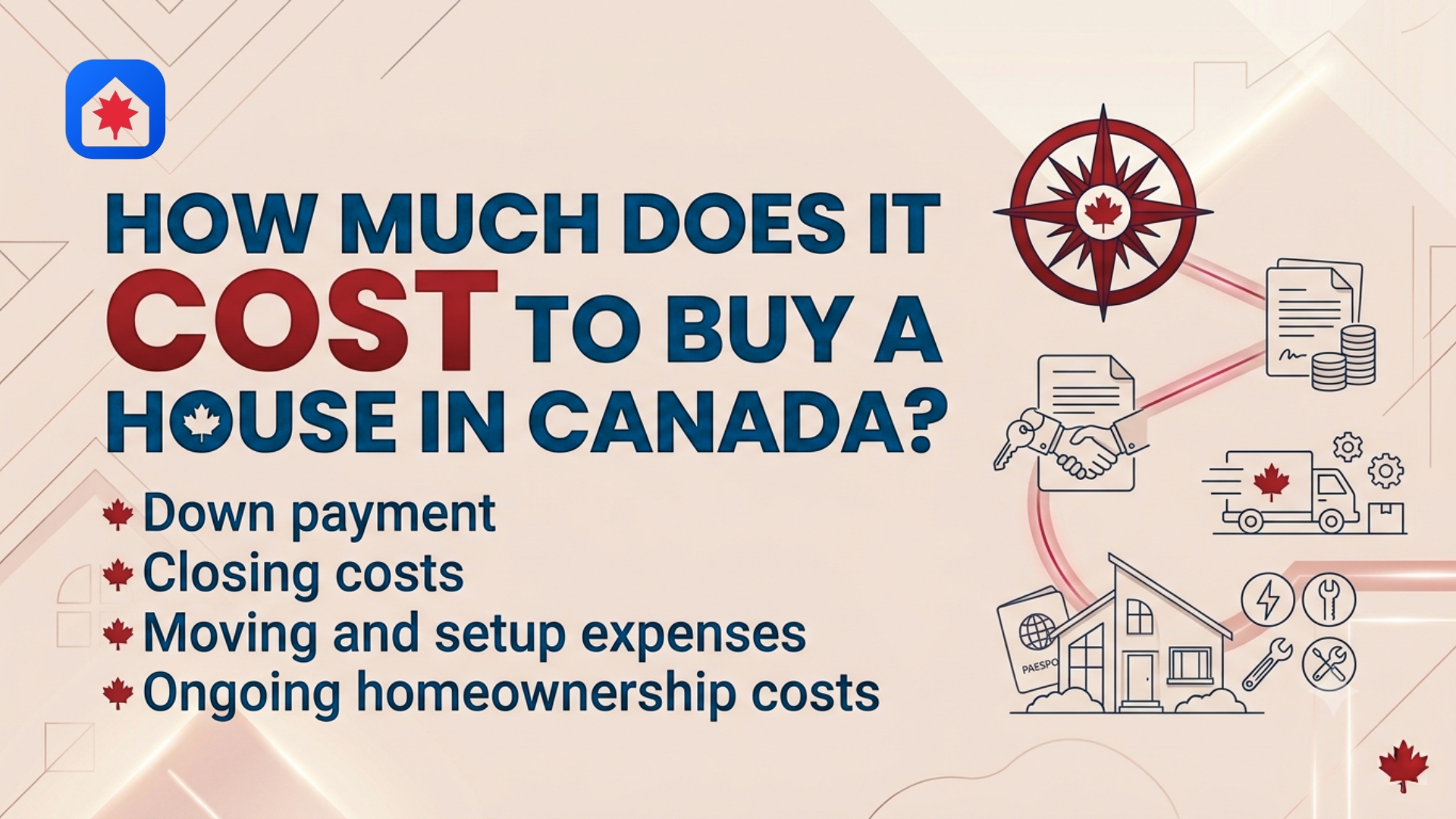
The cost of buying a house in Canada includes more than the purchase price. You need to prepare for the down payment, closing costs, moving expenses, and ongoing homeownership costs. The amount you need depends on the property's price, location, condition, and financing arrangements.
Down payment
A down payment is the portion of the purchase price you pay upfront. The remaining amount is typically financed through a mortgage.
For eligible home purchases, the general minimum down payment requirements are:
- 5% on the first $500,000 of the purchase price.
- 10% on the portion above $500,000 and below $1.5 million.
- 20% for homes priced at $1.5 million or more.
For example, if you purchase an eligible home for $700,000, the general minimum down payment is $45,000:
- 5% of the first $500,000 = $25,000.
- 10% of the remaining $200,000 = $20,000.
- Your total down payment would therefore be $45,000.
These are general minimums, not a guarantee of mortgage approval. Your lender will assess your financial circumstances and the property before deciding how much you can borrow.
Closing costs
Closing costs are expenses associated with completing the property purchase. They are separate from the down payment and are generally payable around the closing date.
Common costs include:
- Land transfer tax: Charged in many provinces when property ownership changes. Some municipalities, including Toronto, also impose an additional land transfer tax. Eligible buyers may qualify for rebates.
- Legal fees and disbursements: Paid to a real estate lawyer or notary to review documents and complete the ownership transfer.
- Home inspection fee: The cost of hiring a professional to assess the property's condition, if you arrange an inspection.
- Title insurance: Coverage against certain title-related risks, depending on the transaction and lender's requirements.
- Property tax adjustments: Amounts you may need to reimburse the seller for property taxes paid in advance.
- Mortgage loan insurance premium: Applicable to eligible mortgages that require insurance. The premium may be added to the mortgage rather than paid entirely upfront.
Not every buyer will pay all these costs. The exact amount depends on the property's location and the details of the transaction. Ask your real estate lawyer or notary for an estimate before finalizing the purchase.
Moving and setup expenses
You should also set aside money for expenses associated with moving into your new home, such as:
- Home insurance, which your mortgage lender may require before closing.
- Moving services or vehicle rental.
- Utility connections or deposits, where applicable.
- Essential appliances, furniture, or urgent repairs.
These expenses may not be part of the formal closing process, but they still affect how much money you need to complete the move comfortably.
Ongoing homeownership costs
After purchasing a home, you will need to budget for recurring expenses, including:
- Mortgage payments: Payments toward the principal and interest.
- Property taxes: Taxes charged by the local municipality.
- Home insurance: Premiums for your insurance policy.
- Utilities: Electricity, heating, water, internet, and other household services.
- Maintenance and repairs: Routine upkeep and unexpected problems.
- Condo fees: Regular fees for shared services and maintenance, if applicable.
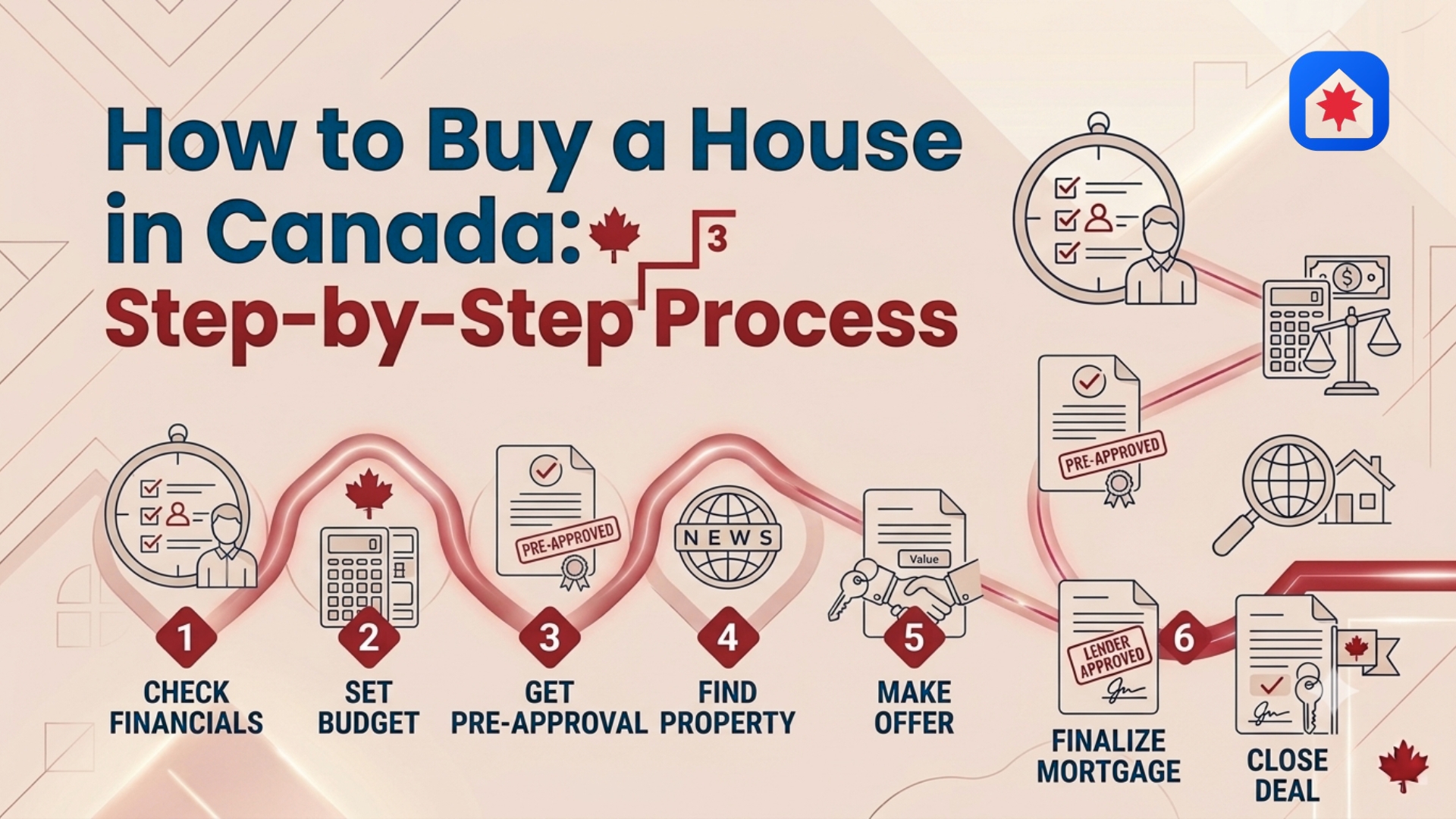
5. How to Buy a House in Canada: Step-by-Step Process
Understanding the home buying process in Canada can help you prepare for each decision, from setting your budget to receiving the keys. Although the details vary by province or territory, the following steps provide a practical overview.
Step 1. Check your readiness and define your priorities
Start by deciding why you want to buy a home, how long you expect to stay, and which locations suit your needs. Make a list of essential features, such as the number of bedrooms, commute time, accessibility, outdoor space, and proximity to schools or services. Identify which features are optional so you can compare properties realistically. If your citizenship or immigration status may affect your eligibility, resolve that question before committing money to a purchase.
Step 2. Calculate your budget and prepare your finances
Work out how much you can afford based on your income, savings, debts, and regular expenses. Include the down payment, closing costs, moving expenses, mortgage payments, property taxes, insurance, utilities, and maintenance. Prepare the documents a lender may request, such as proof of income, employment information, bank statements, and details of existing debts. Keep some savings available for emergencies instead of using every dollar to buy the property.
Step 3. Compare lenders and get mortgage pre-approval
Contact several lenders to compare interest rates, mortgage terms, repayment options, and prepayment penalties. Ask about the documents required for an application and whether mortgage loan insurance may apply. Pre-approval can help you understand your approximate borrowing capacity and narrow your property search. However, avoid making major financial changes, such as taking on new debt, without first consulting your lender.
Step 4. Search for properties and assess their condition
Browse property listings, compare similar homes, and review recent sale prices in the area. This can help you judge whether an asking price is reasonable. During viewings, look for signs of water damage, mould, cracks, and potential problems with the roof, plumbing, heating, or electrical systems. Consider hiring a qualified home inspector to identify issues that may not be obvious. If you are buying a condo, review the condo fees, building rules, reserve fund, financial statements, meeting minutes, and any planned major repairs or special assessments. These documents can reveal potential costs beyond the purchase price.
A local real estate agent can help you compare properties and understand the buying process in your chosen area.
Step 5. Make an offer and understand the conditions
When you find a suitable property, you can submit a written offer outlining the purchase price, deposit, closing date, and other terms. Depending on your circumstances and the agreement, you may include conditions relating to mortgage financing, a satisfactory home inspection, or a review of relevant documents.
Read the purchase agreement carefully before signing, paying close attention to the conditions, deadlines, and consequences of failing to meet them. Avoid waiving financing or home inspection conditions just to make your offer more competitive, as doing so could expose you to financial or legal risks. If anything is unclear, ask your real estate agent or lawyer for clarification. If you need legal advice, you can find a real estate lawyer through CanadaHomeHub to help you better understand the agreement before signing.
Step 6. Finalize the mortgage and legal paperwork
Once your offer is accepted, work with your lender and real estate lawyer or notary to complete the required checks. You may need to provide additional financial documents, finalize your mortgage terms, review title information, and arrange the remaining funds for closing.
Ask your legal representative for a breakdown of the amount due and the payment deadline. Because real estate transactions can be targeted by payment fraud, independently verify any changes to payment instructions using a trusted phone number rather than relying on an unexpected email.
Step 7. Close the deal and take possession
Before closing, arrange home insurance, set up utilities, and coordinate your move. If appropriate, complete a final walkthrough to check the property's condition and confirm that agreed-upon items remain. Your lawyer or notary will explain when the legal transfer is complete and when you can take possession. Once the transaction is completed and possession is authorized, you can receive the keys and move into your new home.
Keep copies of your purchase agreement, mortgage documents, inspection report, and closing records for future reference. The exact requirements vary by province or territory, so confirm the details with your legal representative.
6. Common Mistakes to Avoid When Buying a House in Canada
Even with careful planning, buyers can overlook details that lead to unexpected costs or complications. Understanding these common mistakes can help you make better decisions.
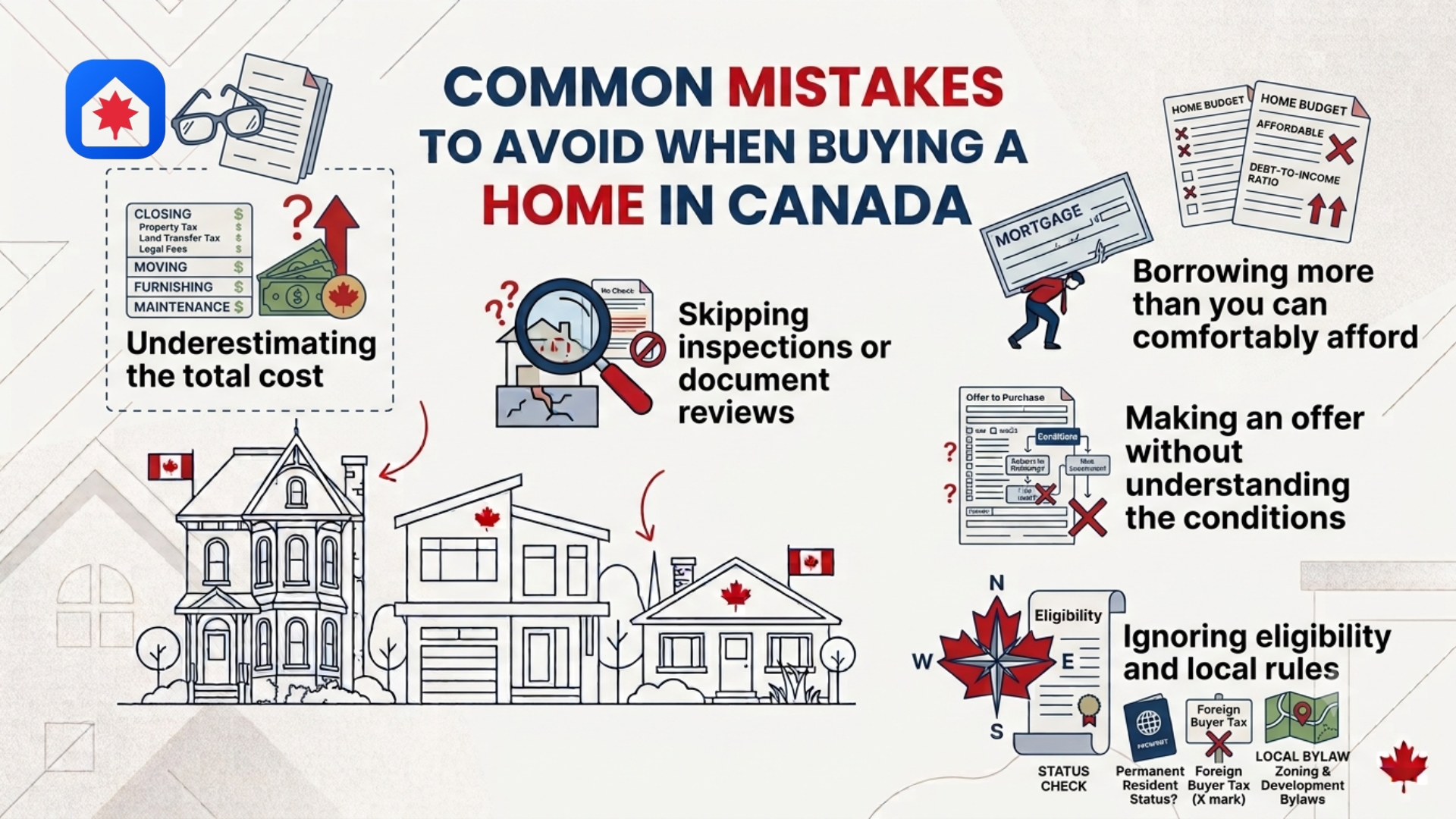
Underestimating the total cost
Focusing only on the purchase price and down payment can leave you short of money for legal fees, taxes, moving expenses, or repairs.
How to avoid it: Estimate your upfront and ongoing expenses before making an offer. Include applicable land transfer taxes, legal fees, insurance, property taxes, utilities, and a reserve for unexpected repairs.
Borrowing more than you can comfortably afford
A lender's maximum mortgage approval may not leave enough room for emergencies, savings, or changes in your income.
How to avoid it: Set your own spending limit based on your monthly budget and financial goals, rather than treating the maximum loan amount as a target.
Skipping inspections or document reviews
A property may appear well maintained but still have hidden defects. Condo owners may also face special assessments or expensive building repairs.
How to avoid it: Consider a professional inspection and review relevant property documents before making the agreement firm, where possible. If an inspection reveals significant concerns, seek specialist assessments or repair estimates.
Making an offer without understanding the conditions
Financing, inspection, and document-review conditions can provide important protection, but only if you understand them and meet the required deadlines.
How to avoid it: Review the purchase agreement with your real estate agent or lawyer. Ask what each condition covers, when it expires, and what options are available if it cannot be satisfied.
Ignoring eligibility and local rules
Some buyers may be affected by federal restrictions, provincial requirements, or municipal taxes that influence whether they can buy a property and how much the transaction will cost.
How to avoid it: Confirm your eligibility and investigate the rules that apply to your circumstances before signing an offer or paying a deposit.
Avoiding these mistakes cannot eliminate every risk, but it can help you approach home buying in Canada with better financial preparation and clearer expectations.
Learning how to buy a house in Canada starts with understanding your eligibility, setting a realistic budget, and choosing a property that fits your needs. A successful home buying in Canada journey also involves comparing mortgage options, evaluating the property's condition, reviewing the purchase agreement, and preparing for closing. Use this home buying guide Canada as a starting point, but confirm legal, tax, and mortgage requirements with qualified professionals before making a commitment.
Thank you for taking the time to read this article.
For more information, please contact us at CANADAHOMEHUB.