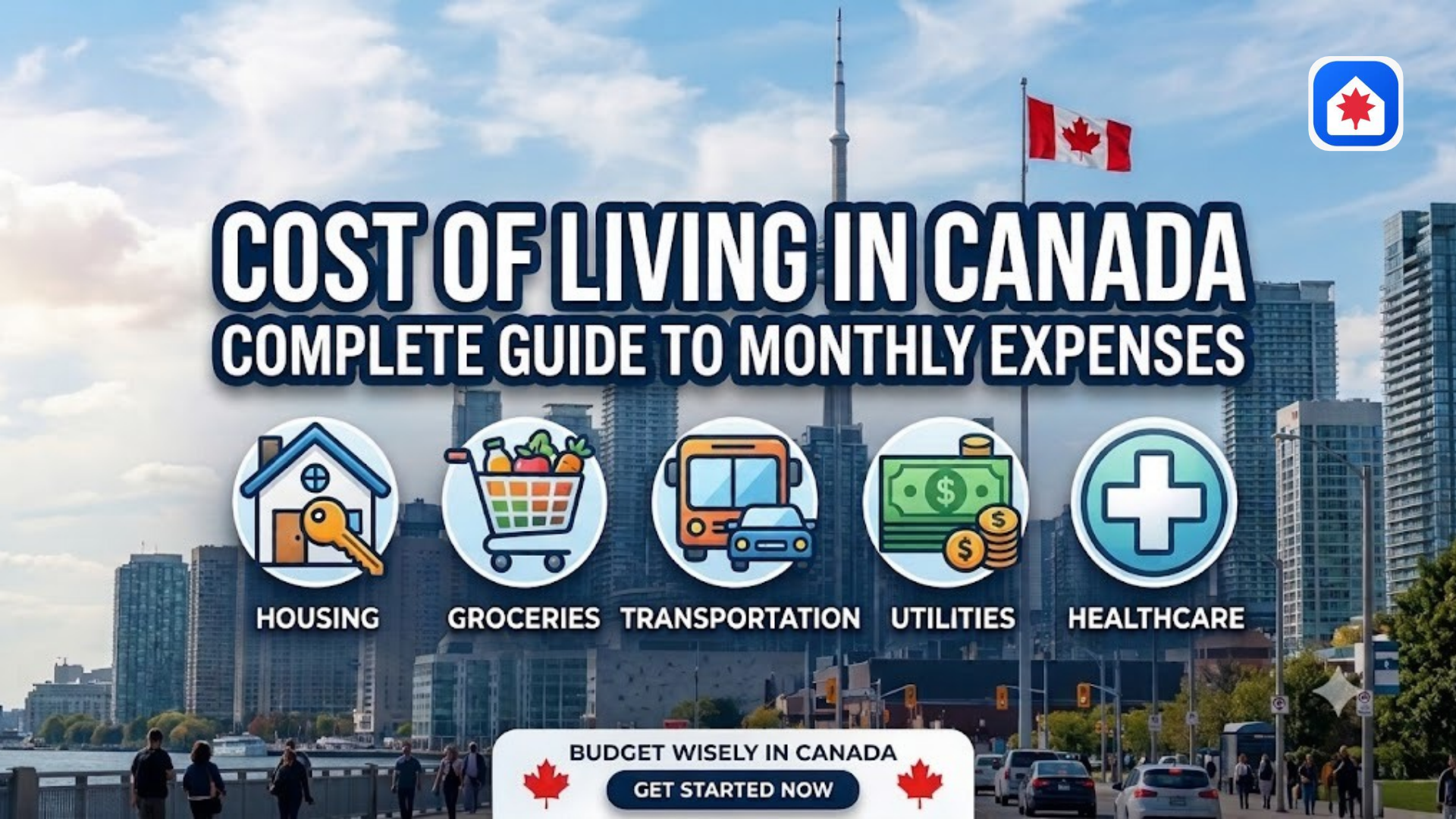
Renowned for its high quality of life, diverse cultural landscape, safety, and economic stability, Canada remains one of the world's premier destinations. However, transitioning smoothly to life in North America requires more than just securing a visa and packing your bags - it demands a realistic, well-researched financial strategy. In recent years, global economic shifts, inflation, and tight housing markets have altered the financial landscape across Canadian provinces. Understanding the true cost of living in Canada is essential for setting realistic expectations, managing your monthly budget, and avoiding unexpected financial strain.
This comprehensive guide delivers an in-depth, transparent breakdown of living expenses in Canada. From detailed rent comparisons and realistic grocery bills to income tax implications and provincial cost variations, this guide provides everything you need to build a solid financial blueprint.
I. Quick Snapshot: How Much Do You Need to Live in Canada?
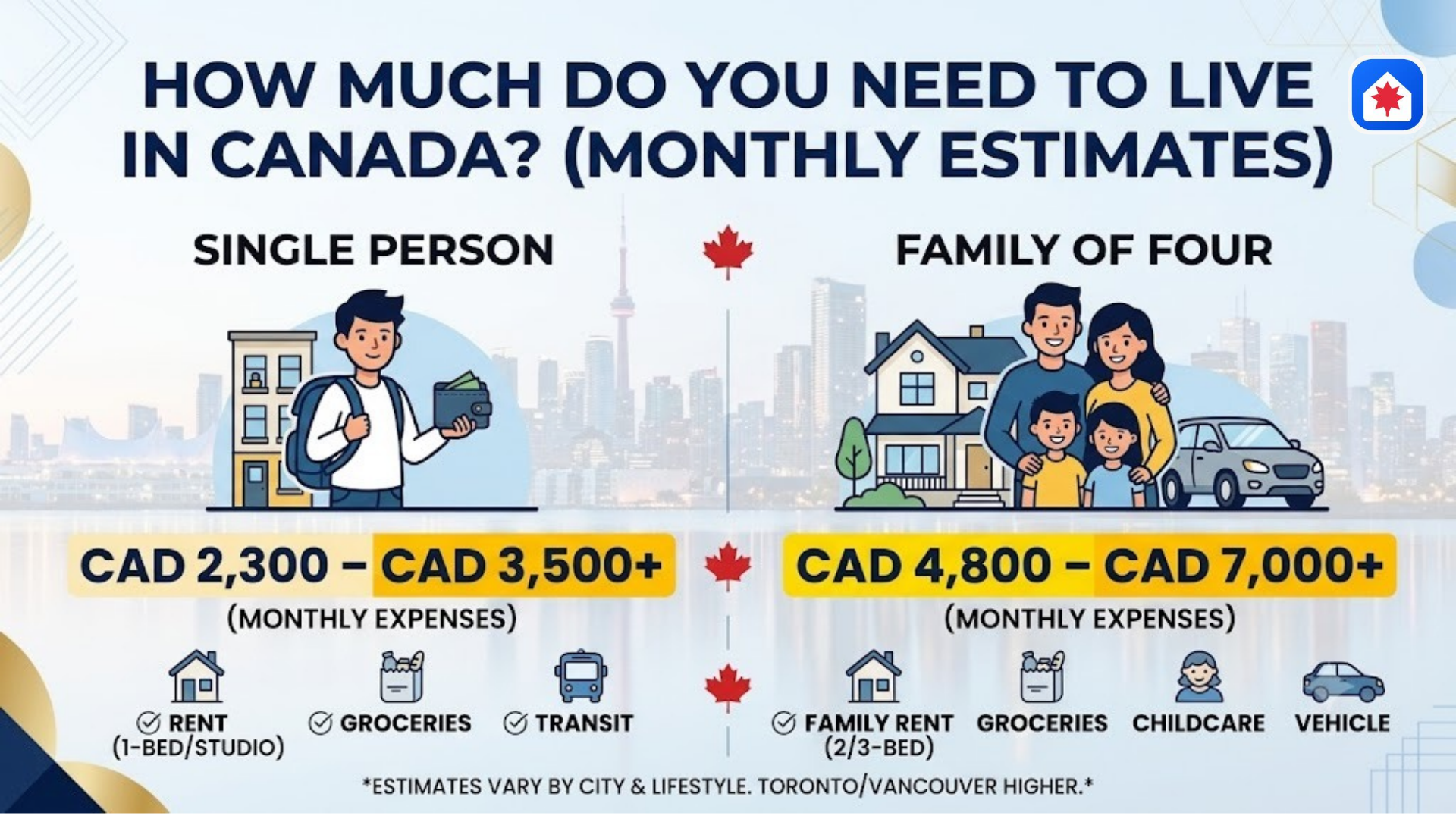
To evaluate your financial readiness, it helps to start with a broad overview of baseline expenses. The average cost of living Canada varies significantly based on your household size, geographic location, and general lifestyle choices.
Baseline Monthly Estimates
- Single Individual: On average, a single person requires between CAD 2,300 and CAD 3,500 per month. This estimate includes rent for a one-bedroom or studio apartment, groceries, basic utilities, high-speed internet, phone plans, public transit, and modest personal spending.
- Family of Four: A family of four typically needs between CAD 4,800 and CAD 7,000 per month. This covers a two- or three-bedroom rental, larger grocery volumes, childcare or extracurricular activities, higher utility usage, and family transportation.
Income vs. Expenses: Wages in Canada
To put these monthly numbers into perspective, you must consider typical Canadian income levels. Canada enforces a mandatory minimum wage, which is regulated at both federal and provincial levels:
- Minimum Wage: Ranges from approximately CAD 14.00 to CAD 17.50 per hour, depending on the province (for example, Ontario’s minimum wage is CAD 16.55/hr, while British Columbia’s is CAD 16.75/hr). Working a full-time minimum wage job (37.5 hours per week) yields a gross monthly income of roughly CAD 2,250 to CAD 2,700 before taxes.
- Average Salary: The national average annual salary for full-time workers in Canada is approximately CAD 63,000 to CAD 68,000 per year (roughly CAD 5,250 to CAD 5,660 per month gross).
While a minimum wage income can comfortably support shared living in smaller towns, living in major metropolitan areas like Toronto or Vancouver often requires a higher starting salary, dual-income households, or shared accommodation strategies.
II. Detailed Breakdown of Monthly Expenses in Canada
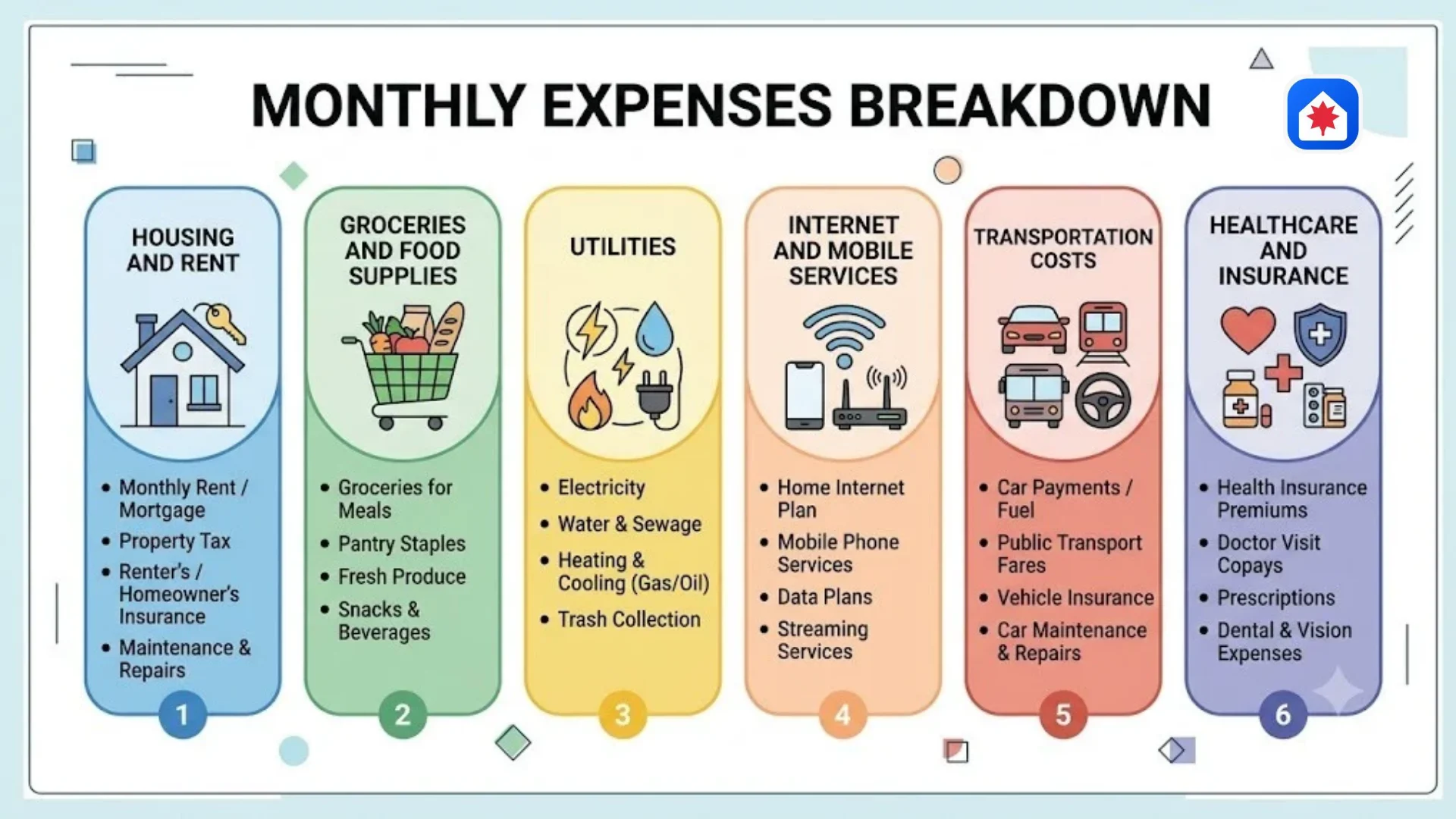
A realistic monthly budget requires examining each primary category of expense. Here is a granular look at what you can expect to spend each month on essential monthly expenses Canada.
Housing & Rent
Housing is consistently the single largest line item in any Canadian household budget. Rental markets in urban centers are highly competitive, driving prices up significantly over the past few years.
- 1-Bedroom Apartment (City Center): CAD 1,900 – CAD 2,800 per month. High-demand hubs like Toronto and Vancouver sit at the top end of this range, whereas cities like Montreal, Calgary, and Winnipeg offer significantly lower rates.
- 1-Bedroom Apartment (Suburbs/Outside City Center): CAD 1,500 – CAD 2,100 per month. Living 30 to 45 minutes outside the core can save you anywhere from $400 to $800 monthly.
- 3-Bedroom Apartment/Townhouse (For Families): CAD 2,700 – CAD 4,500 per month depending on location and amenities.
- Shared Accommodation / Room Rental: CAD 700 – CAD 1,200 per month. This is the primary choice for students and young newcomers aiming to keep rent manageable.
Groceries & Food Supplies
Food costs in Canada have risen due to supply chain dynamics and climate factors affecting agriculture. To manage your food budget, cooking at home is essential.
- Single Adult Budget: CAD 350 – CAD 550 per month.
- Family of Four Budget: CAD 1,100 – CAD 1,600 per month.
Supermarket Price Benchmarks (Average Retail Costs):
- Milk (4 Liters): CAD 5.50 – CAD 7.00
- Loaf of Fresh Bread: CAD 3.00 – CAD 4.20
- Eggs (1 Dozen): CAD 3.80 – CAD 5.00
- Chicken Breasts (1 kg): CAD 14.00 – CAD 18.00
- Rice (2 kg): CAD 6.00 – CAD 8.50
- Apples/Bananas (1 kg): CAD 3.00 – CAD 4.50
Shopping Strategy: Discount grocers such as No Frills, FreshCo, Food Basics, and Walmart offer identical staples at 20% to 30% lower prices than mid-to-high-tier supermarkets like Loblaws, Metro, or Sobeys.
Utilities, Internet & Mobile Services
Utility bills vary seasonally, primarily driven by heating demands during Canadian winters.
- Basic Household Utilities (Electricity, Heating, Water, Municipal Services): CAD 160 – CAD 300 per month for an 85m² apartment. In winter months (November through March), heating costs can increase electricity or natural gas bills by $50 to $120 per month.
- Home Broadband Internet (50–100+ Mbps Unlimited): CAD 65 – CAD 105 per month.
- Mobile Phone Plan: CAD 50 – CAD 85 per month per line. Canada’s telecommunication market is dominated by major carriers (Rogers, Bell, Telus), resulting in higher prices than in European or Asian markets. Opting for sub-brands like Fido, Koodo, or Virgin Plus can reduce costs.
Transportation Costs
Navigating Canadian cities involves choosing between public transit networks and personal vehicle ownership.
- Public Transit Monthly Pass: CAD 90 – CAD 160 per month. Major systems include Toronto’s TTC (CAD 156/month), Vancouver’s TransLink (CAD 105–CAD 189/month depending on zones), and Montreal’s STM (CAD 97/month).
- Car Ownership Costs: Owning a car adds substantial costs:
- Car Payment/Lease: CAD 350 – CAD 600/month.
- Auto Insurance: CAD 120 – CAD 300/month (newcomers often pay higher premiums due to a lack of local driving history).
- Fuel: CAD 150 – CAD 300/month depending on commute distance.
- Total Car Expenses: CAD 650 – CAD 1,200+ per month.
Healthcare & Insurance
Canada’s universal healthcare system (Medicare) provides essential coverage, but there are structural gaps newcomers must account for:
- Provincial Health Coverage: Free for citizens and permanent residents. However, some provinces impose a 3-month waiting period for newly arrived permanent residents or work permit holders. Temporary health insurance during this gap costs approximately CAD 70 – CAD 140 per month.
- Supplemental Health Insurance: Public healthcare does not cover prescription medications, dental care, eye examinations, or physiotherapy. Employer-sponsored extended health plans usually cover these, but independent coverage costs CAD 80 – CAD 180 per month.
III. Cost of Living by Province: Where is it Cheapest and Most Expensive?
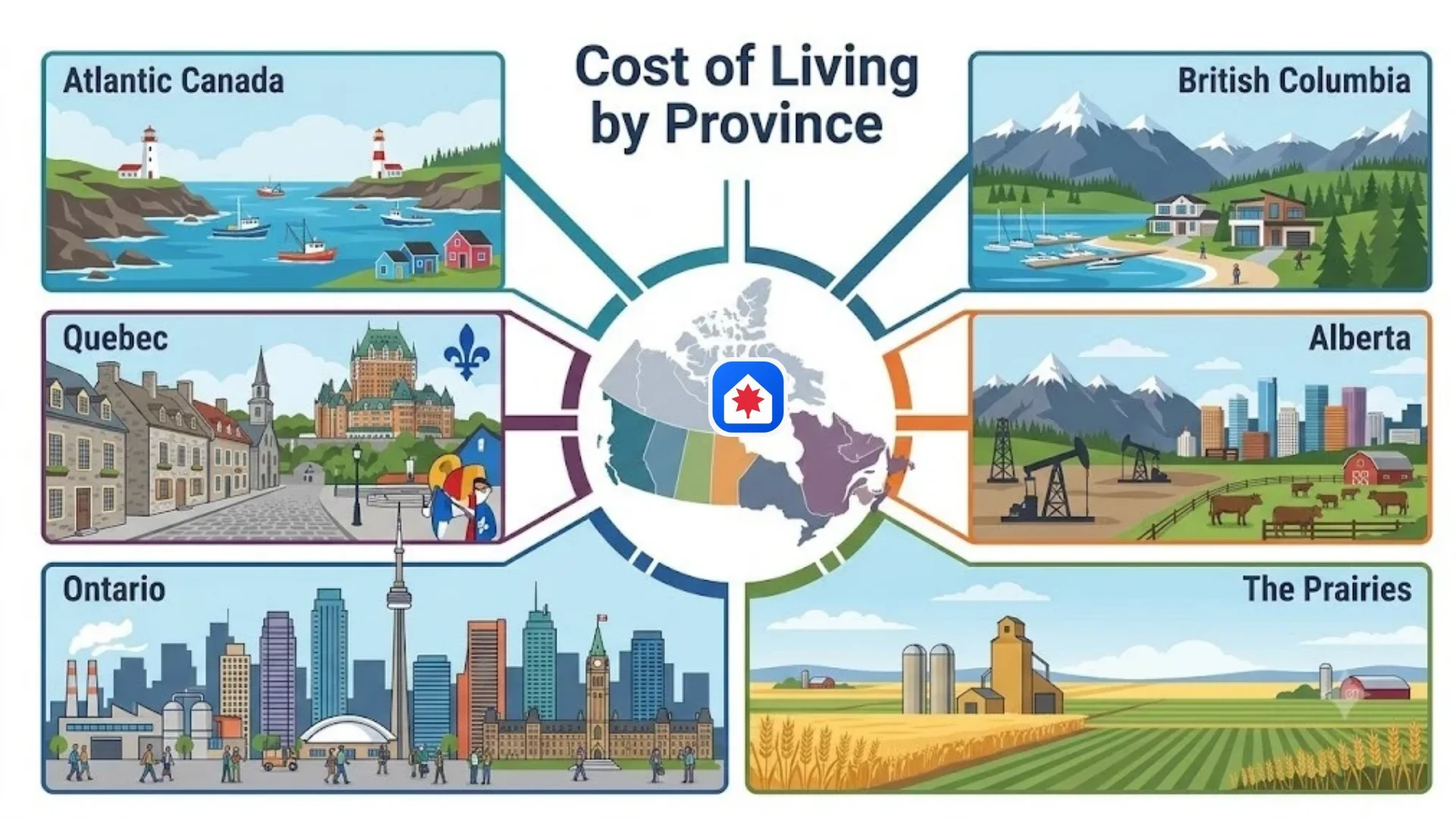
Canada spans six time zones and ten provinces, each with distinct economic conditions, tax structures, and rental markets. Analyzing the cost of living by province Canada is vital for choosing an affordable destination
High-Cost Provinces: British Columbia & Ontario
Ontario and British Columbia house Canada’s largest economic centers. However, this economic vitality comes at a high price:
- British Columbia: Vancouver is consistently ranked as Canada's most expensive real estate market. Average 1-bedroom rents frequently exceed CAD 2,600/month.
- Ontario: Toronto follows closely behind, with average 1-bedroom rents hovering around CAD 2,400–CAD 2,500/month. High demand, competitive rental markets, and higher auto insurance rates make Ontario a costly option for newcomers.
Moderate & Balanced Provinces: Alberta & Quebec
For those seeking strong job markets without extreme housing costs, Alberta and Quebec offer practical alternatives:
- Alberta: Calgary and Edmonton present a compelling financial case. Average 1-bedroom rents range between CAD 1,500 and CAD 1,800/month. Furthermore, Alberta has no Provincial Sales Tax (PST) - residents only pay the 5% Federal GST. Alberta also boasts higher median incomes and lower personal provincial income taxes.
- Quebec: Montreal remains an attractive cultural and economic hub with lower rental costs than Toronto or Vancouver (1-bedroom rents average CAD 1,600 - CAD 1,900/month). While Quebec charges higher provincial income tax rates, it balances this with heavily subsidized childcare (as low as CAD 10/day) and affordable post-secondary tuition.
Affordable Destinations: The Prairies & Atlantic Canada
-
The Prairies (Saskatchewan & Manitoba): Cities like Winnipeg and Regina offer some of the most affordable housing in the nation. Single-bedroom apartments can be rented for CAD 1,100–CAD 1,350/month, allowing newcomers to build savings faster.
- Atlantic Canada (Nova Scotia, New Brunswick, PEI, Newfoundland): Historically known for low living costs, Atlantic Canada has seen increased demand in cities like Halifax. Nevertheless, mid-sized towns in New Brunswick (Moncton, Fredericton) still provide accessible entry-level home buying and rental options.
IV. Taxes and Take-Home Pay in Canada
When evaluating the cost of living in Canada, calculating your gross salary alone can lead to budget shortfalls. Canada operates a progressive income tax system combined with mandatory payroll deductions.
Understanding Tax Deductions
Your gross paycheck will automatically have three primary deductions withheld by your employer:
- Federal Income Tax: Progressive tax brackets ranging from 15% on the first CAD 55,867 up to 33% for higher earners.
- Provincial Income Tax: Rates vary by province (e.g., Ontario ranges from 5.05% to 13.16%, whereas Quebec has higher provincial rates).
- Mandatory Social Contributions:
- Canada Pension Plan (CPP): 5.95% of eligible earnings.
- Employment Insurance (EI): 1.66% of eligible earnings.
Estimated Net Income (Take-Home Pay) Examples
- CAD 50,000 Annual Salary: Yields a net income of approximately CAD 38,500 to CAD 40,000 per year (roughly CAD 3,200 – CAD 3,330 net per month).
- CAD 80,000 Annual Salary: Yields a net income of approximately CAD 58,000 to CAD 61,000 per year (roughly CAD 4,830 – CAD 5,080 net per month).
Key Takeaway: Always build your monthly lifestyle budget based on your net take-home pay rather than your gross annual offer letter.
V. Hidden Costs Most Newcomers Forget
Unexpected expenses can quickly strain a newly established budget. When planning your financial transition around the cost of living in Canada, be sure to incorporate these frequently overlooked line items:
- Winter Readiness Gear & Vehicle Maintenance:
- Quality cold-weather clothing (heavy down parka, thermal undergarments, insulated waterproof boots) costs CAD 400 – CAD 800 per person.
- In most Canadian provinces, driving safely in winter requires winter tires. Purchasing a set of winter tires plus rim mounting costs CAD 700 – CAD 1,200.
- Point-of-Sale Taxes (HST / GST / PST):
- Unlike many countries where advertised prices include sales tax, price tags in Canadian stores display the pre-tax amount. At checkout, taxes are added:
- Ontario (HST): Adds 13%.
- British Columbia (GST + PST): Adds 12%.
- Alberta (GST only): Adds 5%.
- Quebec (GST + QST): Adds 14.975%.
- Unlike many countries where advertised prices include sales tax, price tags in Canadian stores display the pre-tax amount. At checkout, taxes are added:
- Service Tipping Culture: Tipping is expected for personal services. Standard tips range from 15% to 20% on restaurant bills, hairdressing, food delivery, and taxi rides.
- Upfront Rental Move-In Deposits: Landlords typically require first and last month’s rent upfront upon signing a lease. In provinces like British Columbia, landlords collect a security deposit equal to half a month's rent. You should prepare CAD 3,000 to CAD 5,000 in liquid cash just to secure a rental unit.
VI. Practical Tips to Lower Your Cost of Living in Canada
Managing your monthly expenses Canada effectively does not require sacrificing your comfort. Adopting these practical lifestyle adjustments can help keep your budget on track:
- Embrace Satellite & Suburb Living: Consider living in well-connected suburban towns rather than downtown cores. For example, living in Hamilton or Oshawa instead of downtown Toronto, or choosing Surrey instead of central Vancouver, can reduce monthly rent by 20% to 35% while keeping commuting manageable via commuter trains (like GO Transit).
- Leverage Loyalty & Cash-Back Programs: Canadian retailers offer competitive customer loyalty programs. Programs like PC Optimum (earned at No Frills, Shoppers Drug Mart, Real Canadian Superstore) allow you to convert everyday points directly into free groceries.
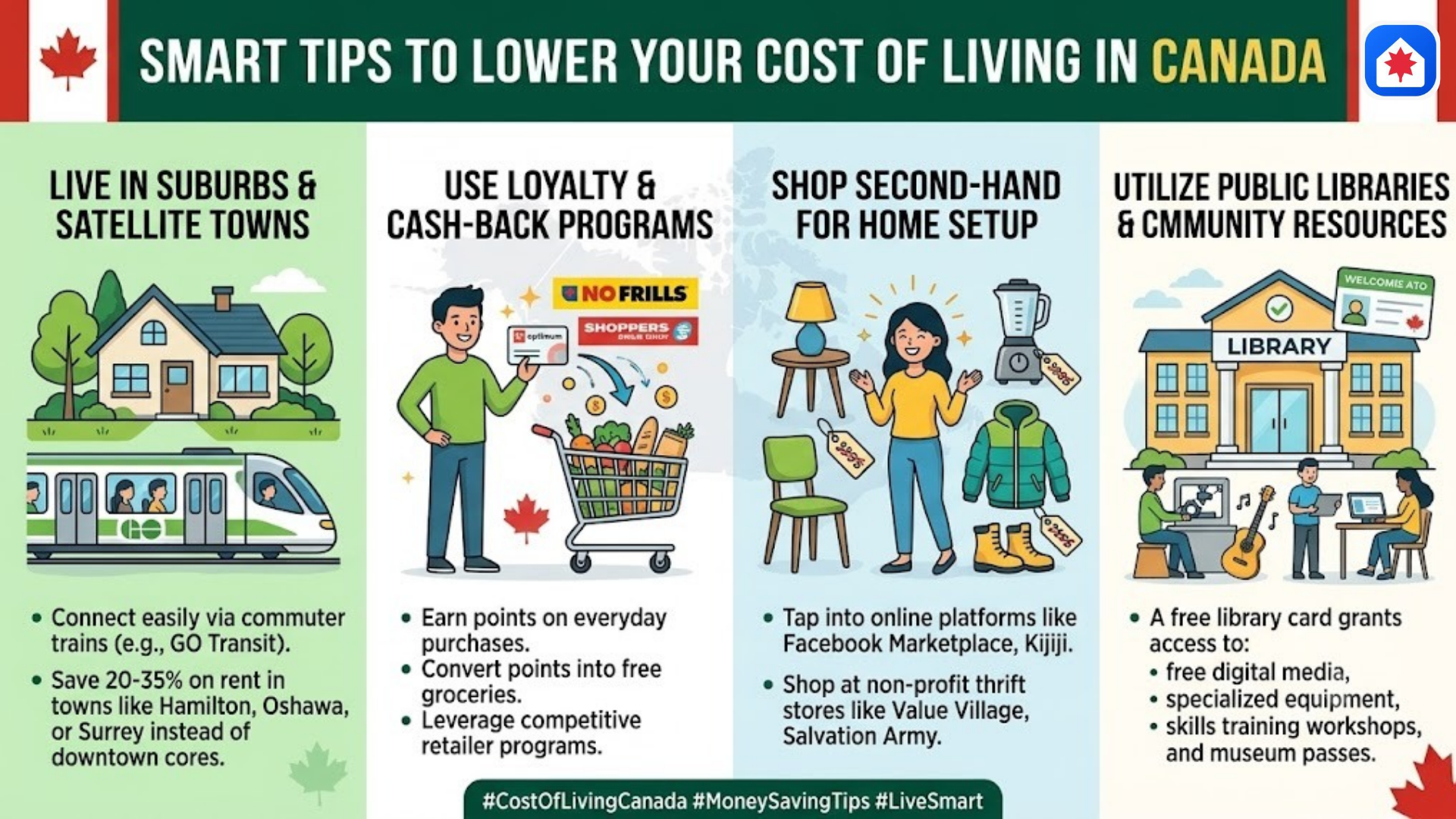
- Shop Second-Hand for Home Setup: Furnishing an apartment from scratch can cost thousands of dollars. Tapping into platforms like Facebook Marketplace, Kijiji, and non-profit thrift stores like Value Village or Salvation Army allows you to purchase lightly used furniture, kitchen appliances, and winter gear for a fraction of retail prices.
- Utilize Community Resources & Public Libraries: Canadian public libraries are community hubs that offer far more than physical books. A free library card grants access to free digital media subscriptions, 3D printing labs, museum passes, equipment borrowing, and language training workshops.
Conclusion & Final Financial Checklist
Navigating the cost of living in Canada requires diligence, accurate planning, and adaptability. While certain major metropolitan regions present high housing costs, choosing the right province, adopting practical money-saving strategies, and budgeting based on net take-home pay will help secure your financial stability.
Pre-Arrival Financial Checklist
Before boarding your flight to Canada, ensure you have completed these key preparation steps:
- Emergency Fund: Establish a liquid cash reserve equal to at least 3 to 6 months of living expenses.
- Housing Research: Begin tracking rental listings on realtor.ca, Zumper, and Rentals.ca two months prior to arrival.
- Initial Move-In Capital: Set aside CAD 4,000 – CAD 6,000 for lease deposits, initial grocery trips, and essential furniture purchases.
- Health Insurance Gap: Secure private health insurance coverage if your target province enforces a waiting period for public healthcare.
- Tax Strategy: Calculate your estimated net take-home salary based on your destination province's tax brackets.
By pairing realistic financial expectations with a strategic approach to daily expenses, you can focus on building a successful life in Canada.
Thank you for reading our article!