Finding suitable childcare is an important part of planning family expenses in Canada. For parents, daycare fees can take up a significant portion of the monthly household budget. The good news is that childcare costs Canada have decreased in recent years as federal and provincial governments have introduced fee-reduction programs. However, what families actually pay still depends on their province, the child's age, and the type of care. This guide explains average daycare expenses across Canada, breaks down costs by age group, and explores childcare benefits Canada and other financial assistance programs that can help families manage these expenses.
1. How Much Does Childcare Cost in Canada?
According to Statistics Canada's 2025 Survey on Early Learning and Child Care Arrangements, parents paid an average of $435 per month for full-time centre-based childcare and $534 per month for home-based childcare for children aged 0 to 5. These figures reflect the actual expenses reported by parents, rather than the full market price that childcare providers charge.
For families researching daycare costs Canada, it is important to understand that the amount paid can differ significantly depending on several factors:
- Child's age: Infant care generally costs more because younger children require closer supervision and smaller caregiver-to-child ratios.
- Location: Fees vary considerably between provinces, territories and individual communities.
- Type of provider: Childcare centres, home-based providers and private caregivers use different pricing structures.
- Government fee reductions: Families using eligible participating providers may pay considerably less than those using unsubsidized services.
- Schedule: Full-time, part-time, extended-hour and occasional care arrangements may have different rates.
Parents should therefore compare the actual amount payable after applicable fee reductions and subsidies, rather than relying solely on a provider's advertised rate.
2. Childcare Costs Canada by Age Group
The age of a child is one of the main factors influencing daycare fees in Canada. Younger children typically need more individual attention, which can increase staffing and operating costs. When comparing childcare costs Canada, parents should consider the care requirements and typical arrangements for each age group.
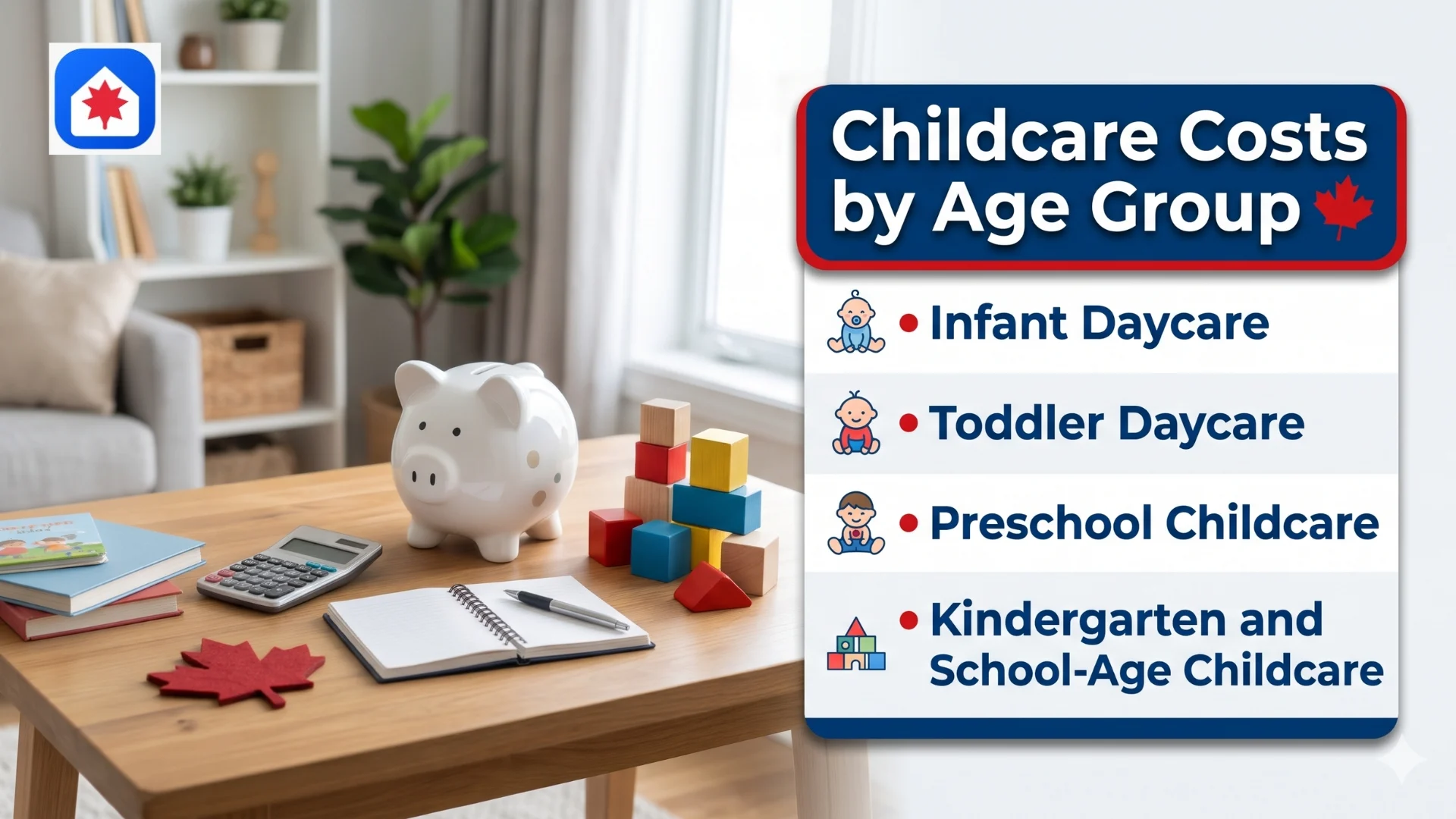
2.1. Infant Daycare (Under 18 Months)
Infant daycare is generally the most expensive full-time childcare category. Babies require frequent feeding, diaper changes, naps, and close supervision throughout the day. Childcare facilities must also follow stricter staffing ratios for younger children, which can increase the total cost.
In Ontario, for example, the province's 2025 Early Years and Child Care Annual Report recorded average daily parent fees of $36.57 for full-day infant care across all licensed centres before the subsequent $22-per-day CWELCC cap took effect.
For parents considering infant daycare, it is important to check whether the centre participates in CWELCC and whether the quoted fee already reflects government reductions.
2.2. Toddler Daycare (18 Months to 2-3 Years)
Toddlers are generally more active and independent than infants, but they still require consistent supervision, help with meals, and support with early social development. As children move into this age group, some childcare centres can accommodate larger groups, depending on provincial licensing requirements.
In Ontario, the reported average full-day fee for toddlers at licensed centres was $33.31 per day in the 2025 annual report, based on data collected before the newer fee cap.
Families should also ask whether meals, snacks, outdoor activities and other daily essentials are included in the quoted rate.
2.3. Preschool Childcare (3-5 Years)
Preschool programs focus more on early learning, communication, social interaction, and preparation for kindergarten. Children in this age group may attend full-day or part-day programs, depending on their parents' schedules and the provider's operating hours.
Preschool care is often less expensive than infant care. Ontario's 2025 annual report recorded an average full-day fee of $30.89 per day for preschool children in licensed centres, compared with $36.57 for infants.
2.4. Kindergarten and School-Age Childcare (5-12 Years)
Once children start kindergarten or elementary school, parents may no longer need full-day daycare. However, childcare expenses can continue because school schedules do not always match working hours.
Common options include:
- Before-school programs for children who need supervision before classes begin.
- After-school programs for children who cannot go home immediately after school.
- School-break care during summer holidays, winter holidays, and professional development days.
- Full-day programs for younger school-age children during school closures.
These programs usually charge according to the hours of care and the child's age. Some providers offer monthly packages, while others charge daily or weekly rates.
3. Daycare Costs by Province and Territory in Canada
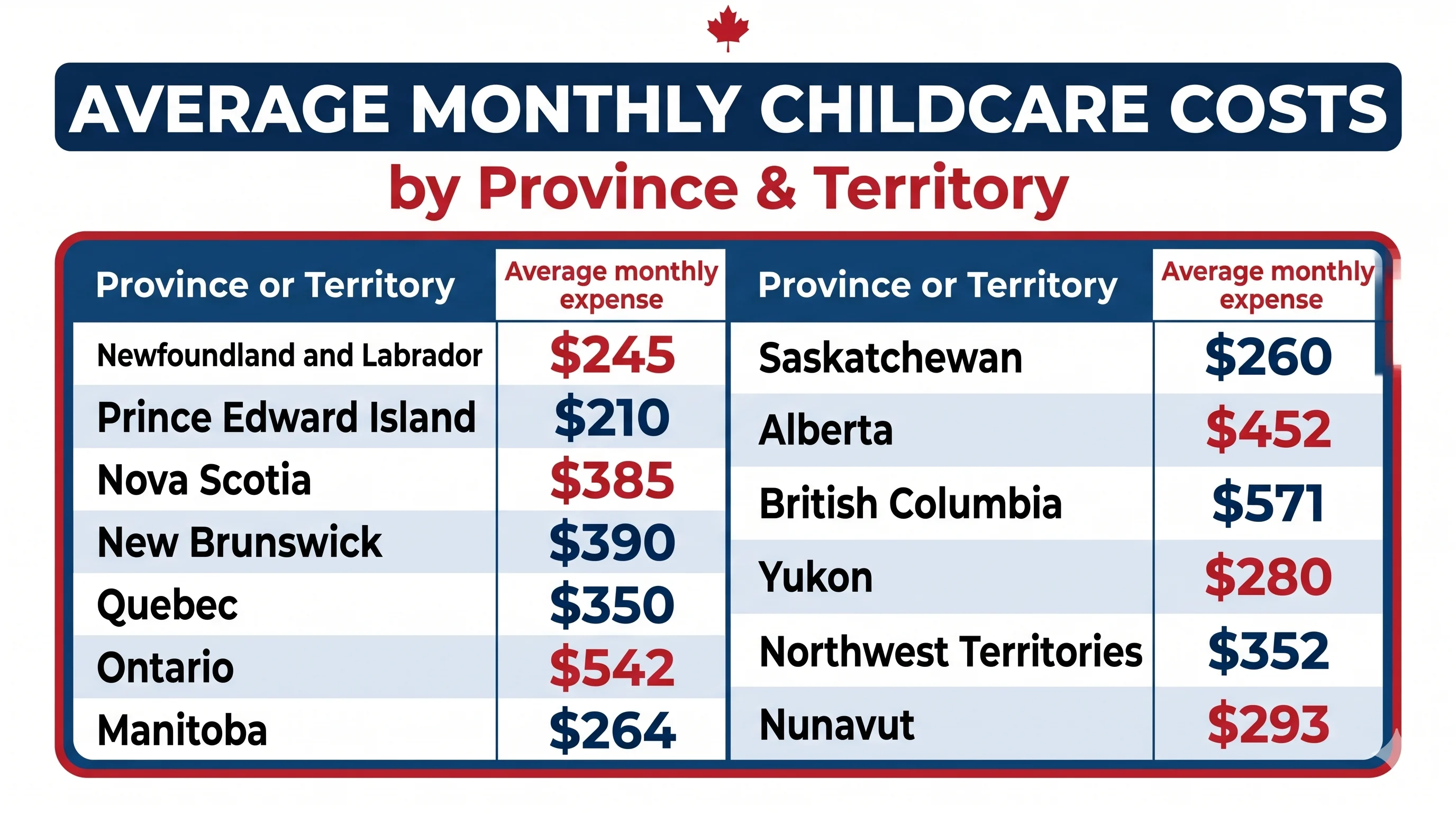
The cost of childcare varies significantly across Canada. Government fee-reduction policies have made licensed childcare more affordable in many jurisdictions, but families in Ontario, Alberta and British Columbia may still face higher monthly expenses than those in several Atlantic provinces and the Prairies.
For parents comparing daycare fees by province Canada, the following table uses Statistics Canada's 2025 Survey on Early Learning and Child Care Arrangements. It reports average monthly expenses paid by parents for full-time centre-based care for children aged 0-5.
If you are planning your household budget, CanadaHomeHub also provides useful information to help you understand other living expenses in Canada.
4. Types of Childcare in Canada
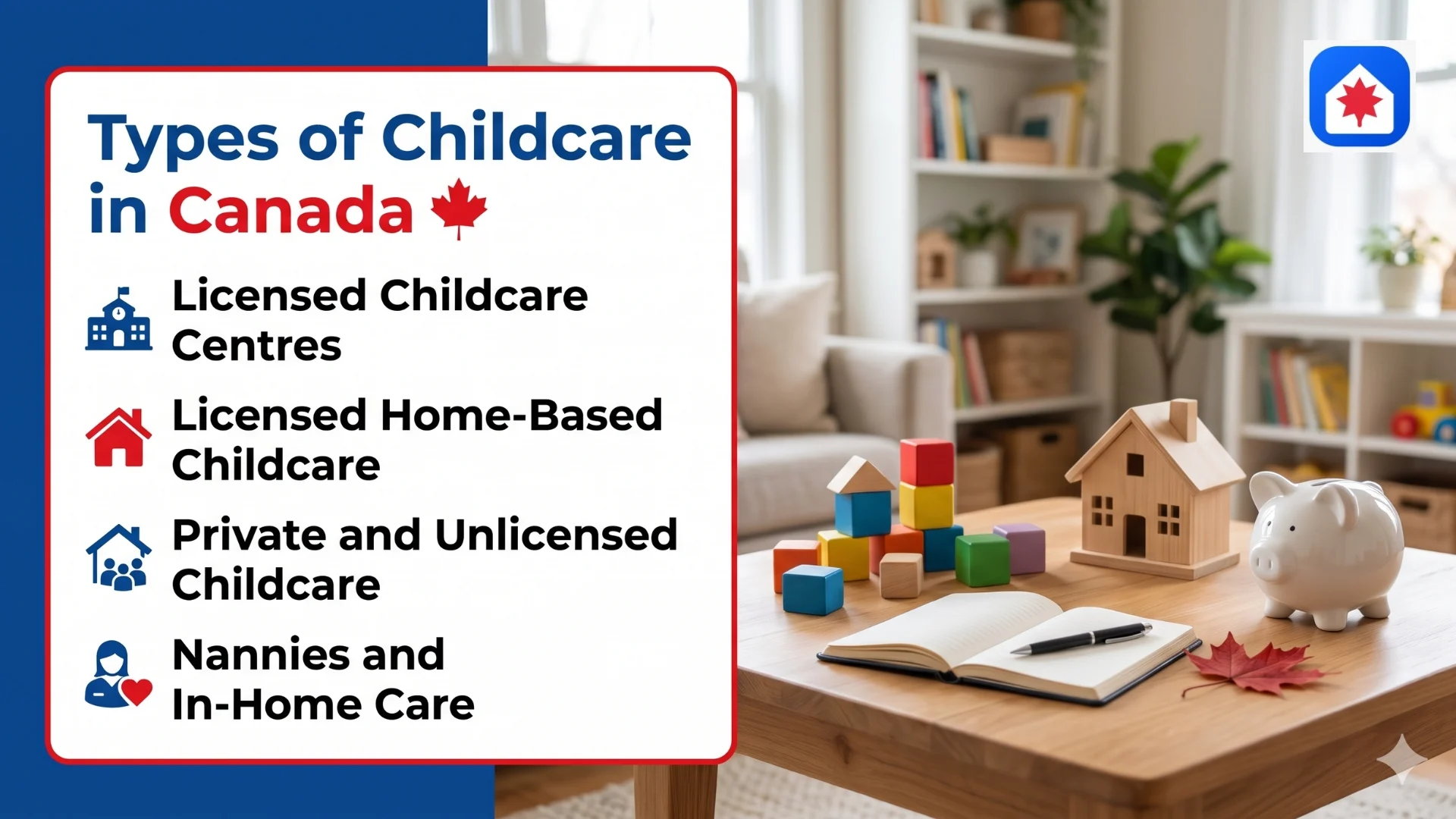
Besides location and age, the type of childcare arrangement can significantly affect how much parents pay. Canada offers several options, from licensed childcare centres to private caregivers who look after children in their own homes or at the family's residence.
4.1. Licensed Childcare Centres
Licensed childcare centres operate in dedicated facilities and must comply with provincial or territorial regulations. These requirements generally cover staff qualifications, child-to-staff ratios, health and safety, facilities, and program standards. They are a common choice for parents who need regular full-time or part-time care.
Advantages:
- Structured daily routines and early learning activities.
- Multiple educators and established operating procedures.
- Potential eligibility for CWELCC fee reductions.
- Opportunities for children to interact with peers.
Considerations:
- Popular centres may have long waitlists.
- Operating hours may not accommodate every work schedule.
- Fees and additional charges vary by location and provider.
4.2. Licensed Home-Based Childcare
Home-based childcare takes place in a caregiver's residence. Depending on the province, it may be licensed directly or operate under the supervision of a licensed agency. These arrangements often have smaller groups and may provide a more home-like environment.
Statistics Canada's 2025 survey reported average full-time parental expenses of $534 per month for home-based childcare nationally. However, this category includes both licensed and unlicensed providers, so it is not directly comparable with the average for licensed centres.
Parents should verify whether the provider is licensed or agency-approved and whether the arrangement qualifies for government fee reductions.
4.3. Private and Unlicensed Childcare
Some families choose private or unlicensed childcare because they need flexible schedules or cannot find an available licensed space. These arrangements may include caregivers looking after a small number of children in a private residence. However, unlicensed providers are subject to different rules from licensed facilities. The maximum number of children they may care for, age-related requirements, and other conditions depend on provincial or territorial regulations.
One important consideration is that unlicensed arrangements are not eligible for CWELCC fee reductions. Parents should also check caregiver references, emergency procedures, insurance, and the applicable local rules before making a decision.
4.4. Nannies and In-Home Care
A nanny provides childcare in the family's home, either on a live-in or live-out basis. This option can be useful for families with multiple children, irregular work schedules, or specific care requirements.
Unlike daycare centres, nanny arrangements are generally priced based on hours worked, responsibilities, experience, and location. Parents may also need to account for employer obligations, including payroll deductions and employment standards where applicable.
For households with several children, sharing a nanny with another family may help reduce individual costs, provided the arrangement complies with applicable employment and childcare rules.
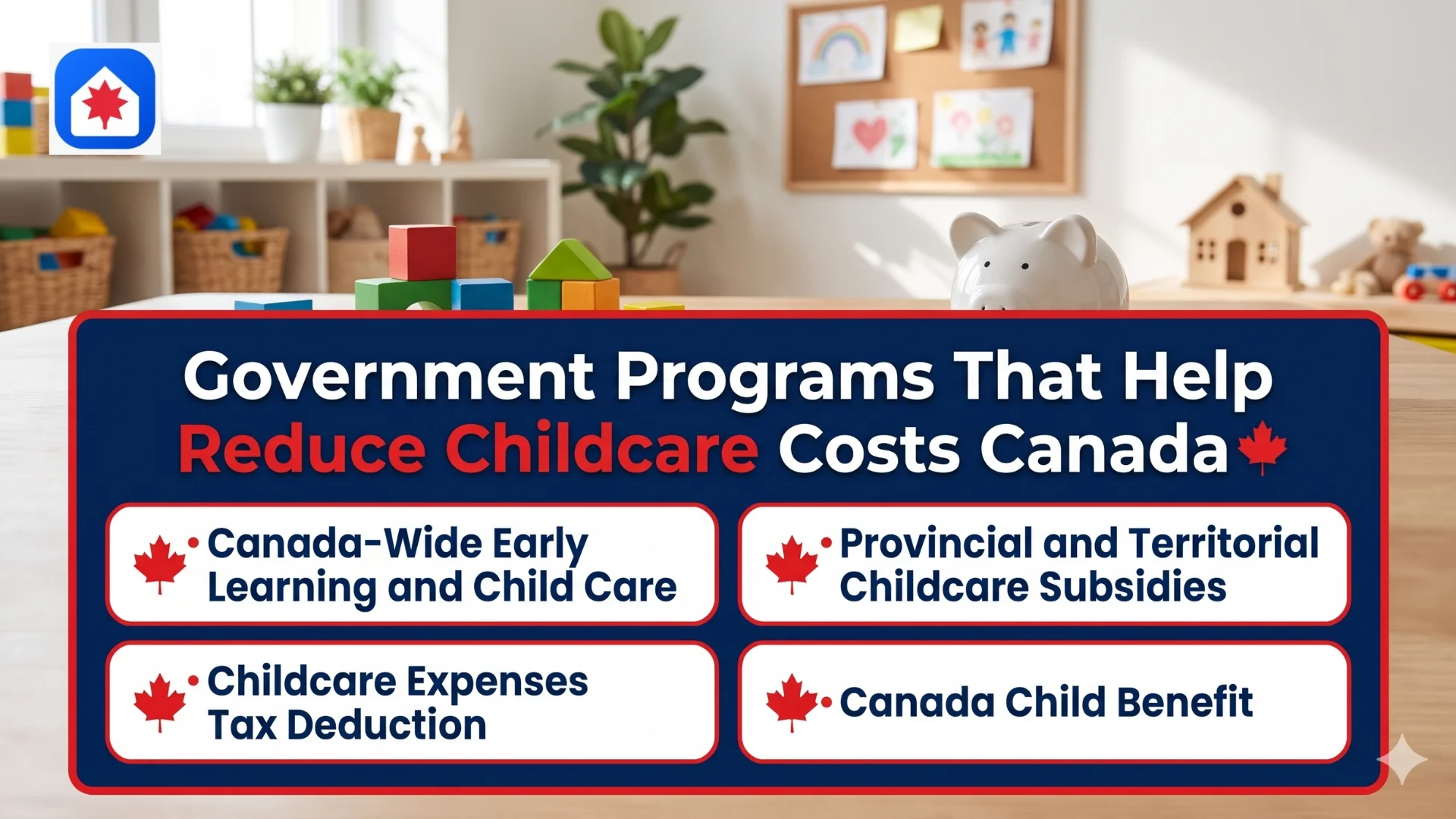
5. Government Programs That Help Reduce Childcare Costs Canada
Families in Canada may qualify for several government programs that reduce childcare costs Canada. Some programs lower the fees charged by eligible providers, while others offer direct financial assistance or tax deductions.
5.1. Canada-Wide Early Learning and Child Care (CWELCC)
The Canada-Wide Early Learning and Child Care system (CWELCC) is a major federal initiative designed to make regulated childcare more affordable for families with children aged 0-5. The program works with provincial and territorial governments to reduce parent fees, expand childcare spaces, and improve access to early learning services.
Its main affordability goals include:
- Reducing average childcare fees by at least 50% from 2019 levels by the end of 2022.
- Working towards an average fee of $10 per day for regulated childcare.
- Supporting the creation of additional affordable childcare spaces.
By 2026, the program had progressed beyond its original five-year agreements. The federal government signed five-year extensions with 11 provinces and territories, while Ontario and Alberta signed one-year extensions for the 2026-2027 fiscal year.
5.2. Provincial and Territorial Childcare Subsidies
In addition to CWELCC fee reductions, provinces and territories may offer separate childcare subsidies for eligible families. These programs are particularly important for households that still struggle to afford daycare after standard fee reductions.
Eligibility often depends on:
- Annual household income.
- Family size and the number of children requiring care.
- The child's age.
- Employment, education, or training status.
- Whether the childcare provider is licensed, registered, or approved.
For example, British Columbia offers the Affordable Child Care Benefit, a monthly payment that helps eligible families cover childcare expenses. The amount depends on household income, family size, and the type of care selected.
Ontario also offers a child care fee subsidy. The amount a family receives depends on its adjusted net income, and local municipal service managers or district social services administration boards handle applications.
New Brunswick provides childcare financial assistance for qualifying low- and middle-income families. Its program considers household income, the child's age, and the designation status of the childcare facility.
Because each province has different rules, parents should contact their local childcare authority to check eligibility and application requirements. Checking these programs is an important step for families looking for affordable childcare Canada.
5.3. Childcare Expenses Tax Deduction
The Canada Revenue Agency (CRA) allows eligible taxpayers to deduct certain childcare expenses from their taxable income. This deduction is designed to help parents who pay for childcare so they can work, operate a business, attend school, or meet other qualifying conditions.
Eligible expenses may include payments for:
- Daycare centres and nursery schools.
- Babysitters and other childcare providers.
- Eligible day camps and day sports schools.
- The childcare portion of fees paid to certain educational institutions.
Most couples generally have the lower-income spouse or common-law partner claim the deduction, subject to specific exceptions.
To claim eligible expenses, parents must complete Form T778 and report the allowable amount on line 21400 of their tax return. They should also keep receipts and supporting documents in case the CRA requests them.
One important distinction is that a tax deduction is not the same as a direct government payment. It reduces taxable income rather than reimbursing the full amount spent on daycare.
5.4. Canada Child Benefit (CCB)
The Canada Child Benefit (CCB) is a tax-free monthly payment that helps eligible families cover the general costs of raising children under 18.
Although it is not specifically a daycare subsidy, families can use the money to help manage childcare expenses alongside other household costs.
The amount depends on several factors, including:
- Adjusted family net income.
- The number of eligible children.
- The age of each child.
For the July 2026 to June 2027 payment period, eligible families with adjusted family net income below $38,237 may receive the maximum amount:
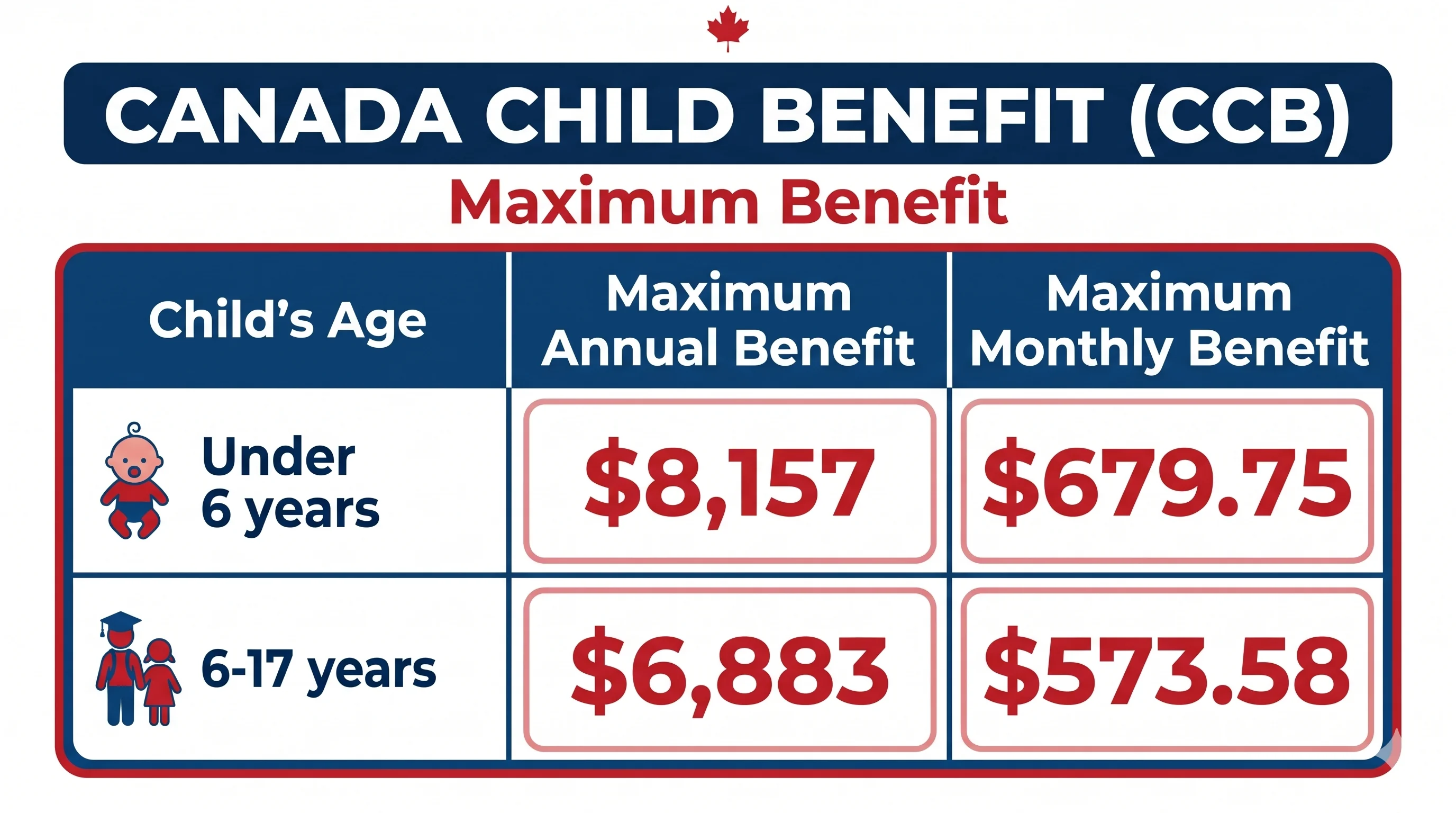
These are maximum amounts, not guaranteed payments. The benefit decreases as adjusted family net income increases.
6. Additional Childcare Expenses Parents Should Budget For
The advertised daycare fee does not always represent the full amount a family will spend on childcare. Some providers charge additional fees for services or activities that fall outside their standard daily rate. These costs may be small individually but can add up over several months.
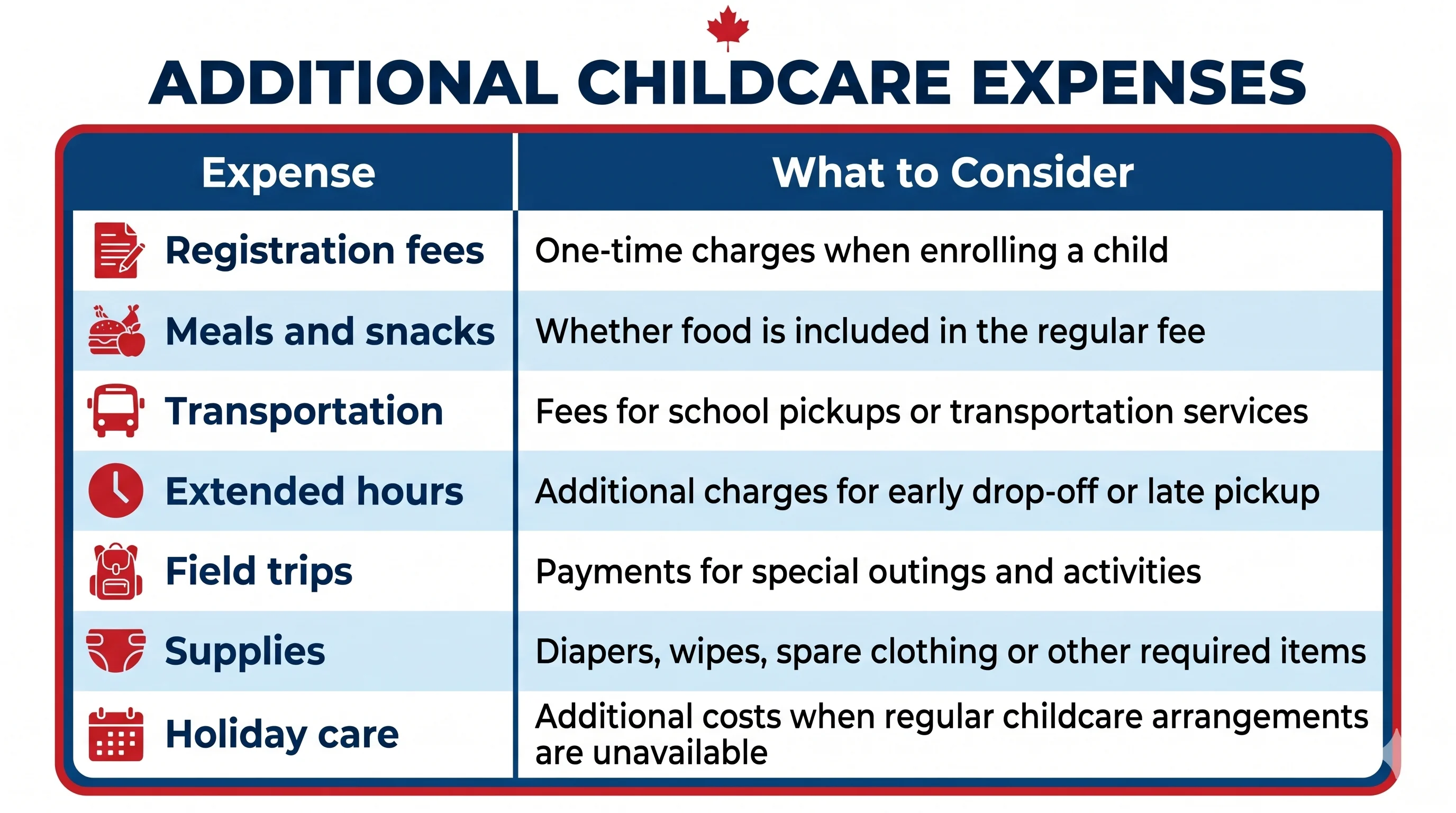
Some centres include meals, snacks and basic supplies in their monthly fees, while others ask parents to provide them. Before signing an agreement, request a complete fee breakdown and ask which charges are mandatory, optional, or refundable. Parents should also check the provider's policies regarding late pickups, absences, holidays, and withdrawal notices to avoid unexpected expenses.
7. How to Find Affordable Childcare in Canada
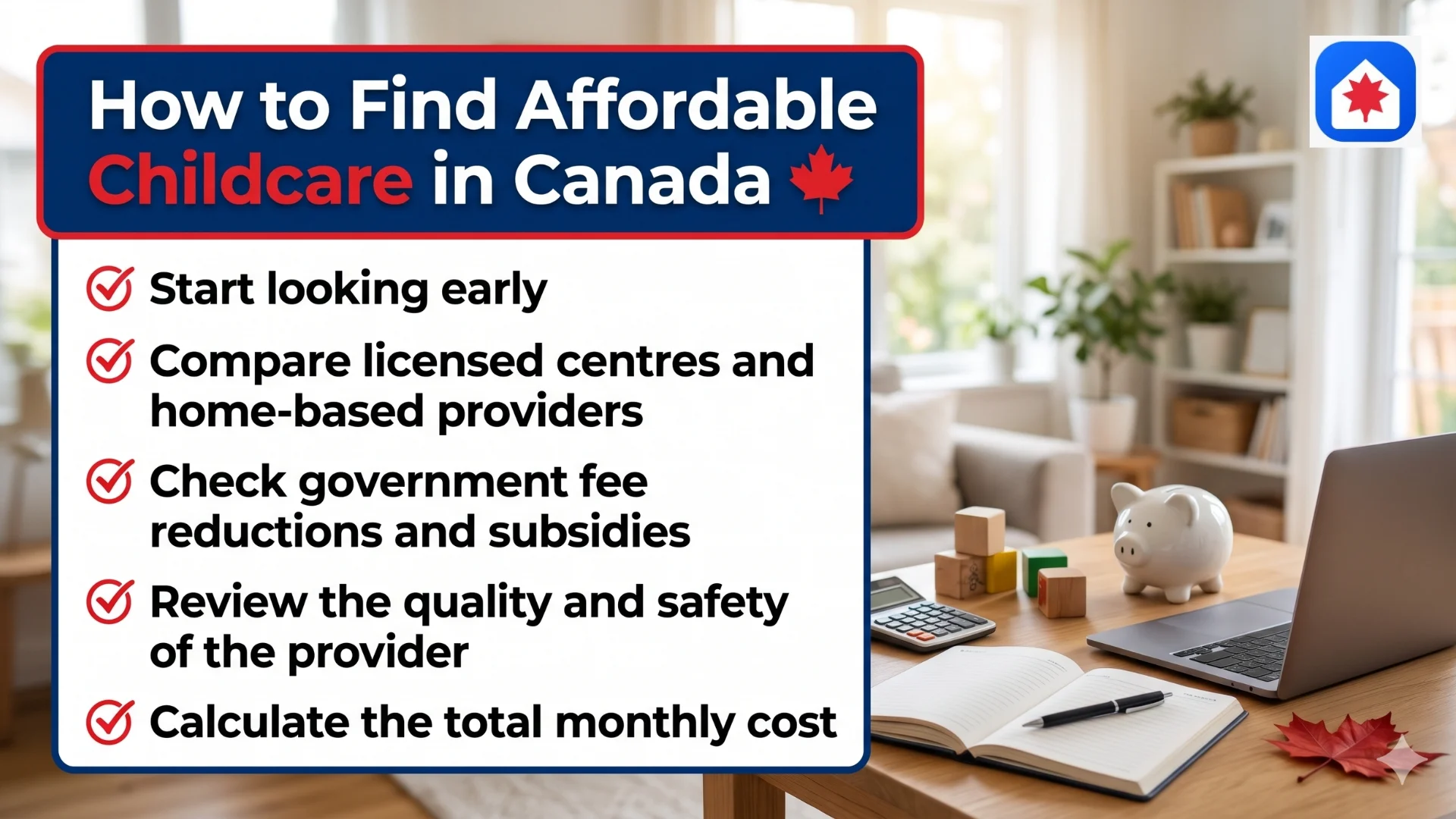
Finding affordable childcare Canada involves more than choosing the provider with the lowest advertised rate. Parents should consider the total cost, availability, location, operating hours, and quality of care. The following steps can make the search easier.
7.1. Start looking early
Childcare spaces can be difficult to secure, especially for infants. Statistics Canada reported that 31% of children aged 0-5 who were not in childcare were on a waitlist in 2025. For children under one year old, the proportion was even higher. So, parents should contact several providers before their intended start date rather than relying on a single daycare centre.
7.2. Compare licensed centres and home-based providers
Request fee information from different providers in your neighbourhood. Compare their full-time and part-time rates, operating hours, included services, and eligibility for government fee reductions. A home-based provider may offer a more convenient schedule or smaller group, while a childcare centre may provide more structured early learning activities.
7.3. Check government fee reductions and subsidies
Ask whether the provider participates in CWELCC or an equivalent provincial program. If your household income is within the applicable eligibility range, check whether you can receive additional childcare assistance.
7.4. Review the quality and safety of the provider
Cost should not be the only consideration. Parents should verify licensing status, staff qualifications, child-to-staff ratios, safety procedures and inspection records where available. Arrange a visit before enrolling your child so you can observe the environment and ask questions about daily routines.
7.5. Calculate the total monthly cost
Before making a decision, add the regular childcare fee to registration charges, meals, transportation, and any other recurring expenses. This calculation helps parents compare providers based on their actual household spending rather than the advertised daycare fee alone.
Frequently Asked Questions
1. Is daycare free in Canada?
No. Canada does not provide universally free daycare for every family. However, CWELCC and provincial programs have significantly reduced fees for eligible childcare spaces. Some families may also qualify for additional financial assistance.
2. How much does daycare cost per month in Canada?
According to Statistics Canada, parents paid an average of $435 per month for full-time centre-based childcare for children aged 0-5 in 2025. However, costs varied by province, provider, and the availability of government fee reductions.
3. Which province has the cheapest childcare in Canada?
Based on Statistics Canada's 2025 survey of full-time centre-based childcare expenses, Prince Edward Island had the lowest reported average among the provinces, at approximately $210 per month. Newfoundland and Labrador and Manitoba also reported relatively low expenses. These figures reflect parental spending and do not guarantee that every family can access childcare at those rates.
4. Does the government help pay for daycare in Canada?
Yes. Families may benefit from CWELCC fee reductions, provincial childcare subsidies and the federal child care expenses tax deduction. Eligible households may also receive the Canada Child Benefit to help cover general child-rearing expenses.
5. Can newcomers to Canada apply for childcare subsidies?
Yes, depending on the province or territory and the specific program's eligibility requirements. Newcomers to Canada should check residency, immigration status, household income and employment or education conditions before applying.
6. Are childcare expenses tax-deductible in Canada?
Eligible childcare expenses can generally be deducted from taxable income through the CRA's child care expenses deduction. Parents must meet the applicable conditions, retain receipts, and report eligible expenses using Form T778.
Planning for childcare is an important part of managing family finances in Canada. Although the Canada-wide Early Learning and Child Care system has helped reduce fees, childcare costs Canada still depend on the child's age, location, provider, and eligibility for financial assistance. Families should compare childcare options, check government fee reductions and subsidies, and account for additional expenses before choosing a provider. Taking these steps can make it easier to find suitable care while keeping household costs manageable.
Thank you for taking the time to read this article.
For more information, please contact us at CANADAHOMEHUB.