Raising children in Canada can be expensive, especially when you are managing housing, childcare, groceries, and other everyday costs. The Canada Child Benefit (CCB) is a tax-free monthly payment from the federal government that helps eligible families cover the cost of raising children under 18. This guide explains Canada Child Benefit eligibility, current payment amounts, how to apply, and the requirements for continuing to receive your benefits. Let's dive in.
1. What Is the Canada Child Benefit?
The Canada Child Benefit is a federal government program administered by the Canada Revenue Agency (CRA). It provides tax-free financial assistance to eligible families raising children under 18. The CCB is income-tested, meaning that families with lower adjusted family net incomes generally receive larger payments. Higher-income eligible families may still qualify, but their payments are reduced under the program's calculation rules.
Here are the main features of the program:
- Monthly payments: Eligible families generally receive payments each month.
- Tax-free assistance: CCB payments are not taxable income and do not need to be reported as income on your tax return.
- Income-based calculations: Your adjusted family net income and family circumstances determine your benefit amount.
- Additional support: Applying for the CCB can also help the CRA determine your eligibility for certain related provincial and territorial child benefits.
2. Who Is Eligible for the Canada Child Benefit?
To receive the Canada Child Benefit, you must meet the CRA's eligibility requirements. Having a child under 18 does not automatically mean you qualify.
2.1. Basic Eligibility Requirements
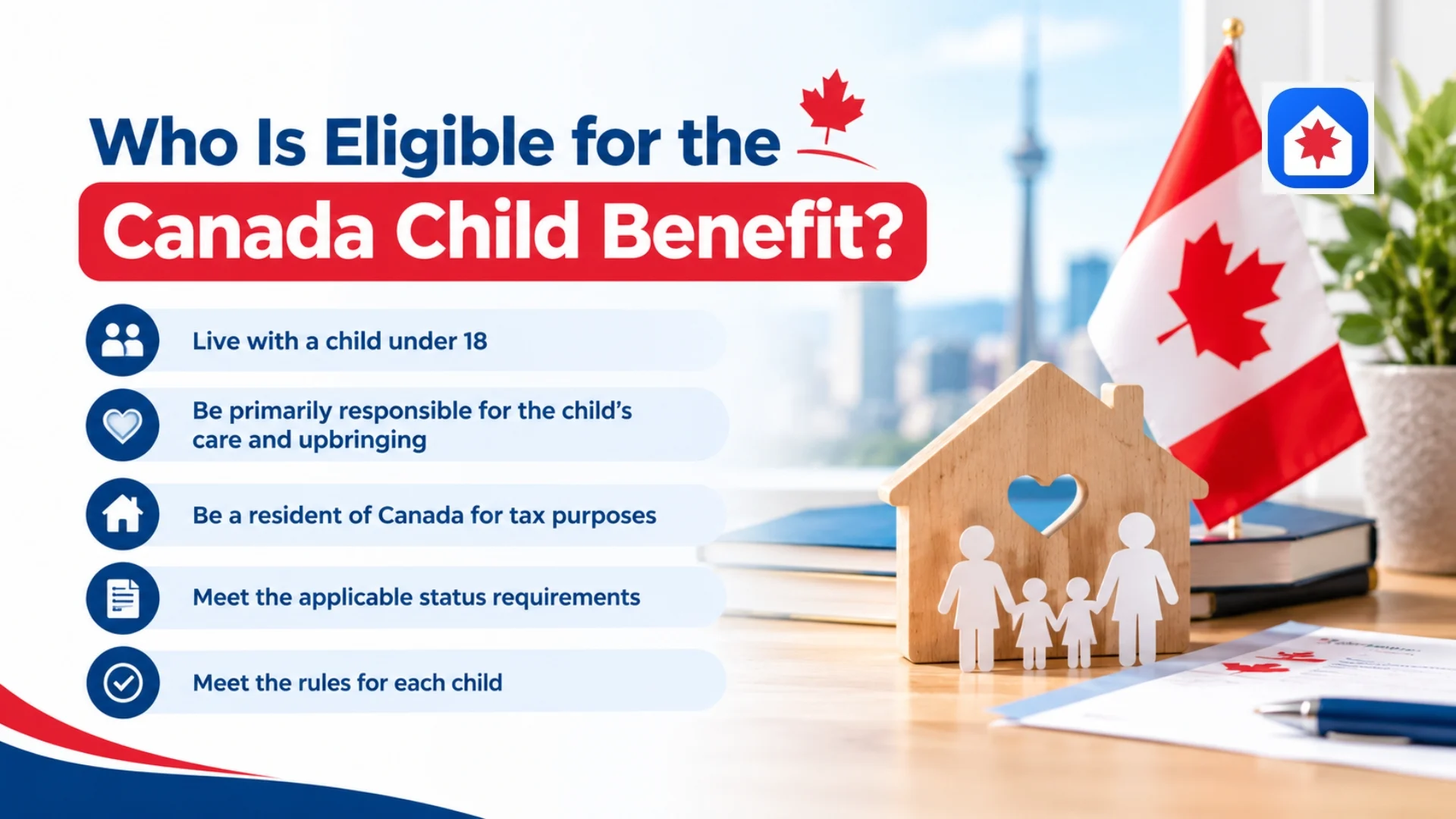
You generally need to meet all of the following conditions:
- Live with a child under 18: The child must ordinarily live with you, and you must be responsible for their care.
- Be primarily responsible for the child's care and upbringing: This includes supervising daily activities, arranging childcare when necessary, and ensuring the child's medical needs are met.
- Be a resident of Canada for tax purposes: Immigration status alone does not determine tax residency. The CRA considers factors such as your residential ties and circumstances.
- Meet the applicable status requirements: You or your spouse or common-law partner must generally be a Canadian citizen, permanent resident, protected person, qualifying temporary resident, or an individual registered or entitled to be registered under the Indian Act.
- Meet the rules for each child: The eligibility conditions must be satisfied for every child for whom you claim benefits.
No single income ceiling determines eligibility for every family. Instead, the CRA calculates the amount based on family circumstances and adjusted family net income. As income rises, the payment generally decreases.
2.2. Canada Child Benefit for Newcomers and Temporary Residents
If you have recently moved to Canada, you may qualify for the CCB even if you have not yet filed your first Canadian income tax return. However, you must meet the program's residency, immigration-status, and caregiving requirements.
The rules differ depending on your status:
- Permanent residents: You may qualify once you meet the tax-residency and other eligibility requirements.
- Protected persons: You may qualify if you have received the required positive determination of refugee protection and meet the other conditions.
- Temporary residents: You generally must have lived in Canada throughout the previous 18 months and hold a valid permit in the 19th month. The permit must not contain wording stating that it does not confer temporary resident status.
- Newcomers applying for the first time: You may need to provide additional information about your immigration status, date of arrival, marital status, and income earned before becoming a Canadian resident for tax purposes.
If you are a newcomer, review the CRA's official Newcomers to Canada and the CRA guide before applying. You may also need to report income earned outside Canada before your arrival. The CRA uses this information in determining benefit amounts for newcomers. Provide the requested information even if you had no income during the relevant period.
2.3. Who Should Apply When Both Parents Live Together?
When both parents live with their child in the same household, only one parent should generally apply for the CCB. Under the CRA's rules, when both parents live together, the female parent is presumed to be primarily responsible for the children's care and upbringing. If the other parent is actually primarily responsible, that parent can apply with a signed letter from the female parent explaining the arrangement. For same-sex parents living together, only one parent should apply for all eligible children in the household.
This rule does not mean that one parent receives a larger benefit simply because they submitted the application. The payment is calculated using the applicable family income and eligibility information.
2.4. Canada Child Benefit and Shared Custody
Parents who share custody after separation or divorce may both qualify for the CCB. The CRA generally considers a child to be in a shared-custody arrangement when the child lives with each parent between 40% and 60% of the time. In this situation, each eligible parent receives 50% of the amount they would otherwise receive if the child lived with them full-time. Each parent's payment is calculated using their own adjusted family net income. As a result, the two payments may differ even though both parents care for the same child.
You must notify the CRA when shared custody starts, ends, or changes. Failing to report a change can lead to incorrect payments and possible repayment obligations.
3. How Much Is the Canada Child Benefit in 2026-2027?
The amount you receive depends on your adjusted family net income, the number of eligible children, and their ages. Families with children who qualify for the disability tax credit may also receive additional support.
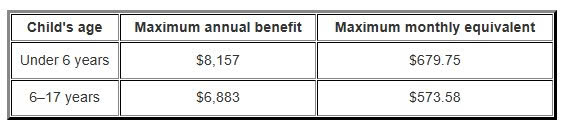
For the July 2026 to June 2027 benefit period, the CRA has published the following maximum amounts. These figures apply to families whose adjusted family net income for 2025 is below $38,237.
3.1. Maximum Canada Child Benefit Amounts
These are maximum amounts, not guaranteed payments. Your actual CCB may be lower if your adjusted family net income exceeds the applicable threshold.
3.2. How Adjusted Family Net Income Affects Your Payments
The CRA uses your adjusted family net income (AFNI) to calculate your CCB. It generally combines the net income reported on your tax return with that of your spouse or common-law partner, if applicable, and makes certain adjustments for specific benefits and repayments. For the July 2026 to June 2027 payment period, the CRA uses income information from the 2025 tax year.
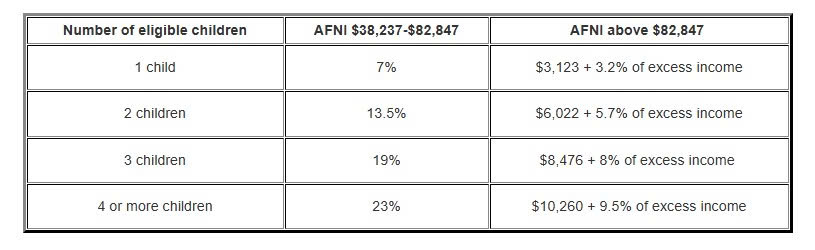
The calculation follows a tiered structure:
- AFNI of $38,237 or less: You receive the maximum benefit for each eligible child.
- AFNI above $38,237 and up to $82,847: Your benefit is reduced by a percentage of the income exceeding $38,237. The percentage depends on the number of eligible children.
- AFNI above $82,847: Your benefit is reduced by a fixed amount plus an additional percentage of the income exceeding $82,847. Both figures depend on the number of eligible children.
The following table summarises the reduction rates published by the CRA for this benefit period.
3.3. Example: Estimating Your Annual Benefit
Suppose a family has two children under 6 and an adjusted family net income of $60,000 for 2025.
First, calculate the maximum annual benefit:
- Child 1: $8,157
- Child 2: $8,157
- Total before reductions: $16,314
Next, calculate the income exceeding the first threshold:
- $60,000 − $38,237 = $21,763
For a family with two eligible children, the reduction in this income range is 13.5%:
- $21,763 × 13.5% = $2,938.005
The estimated annual CCB is therefore:
- $16,314 − $2,938.005 = $13,375.995 per year.
4. How to Apply for the Canada Child Benefit
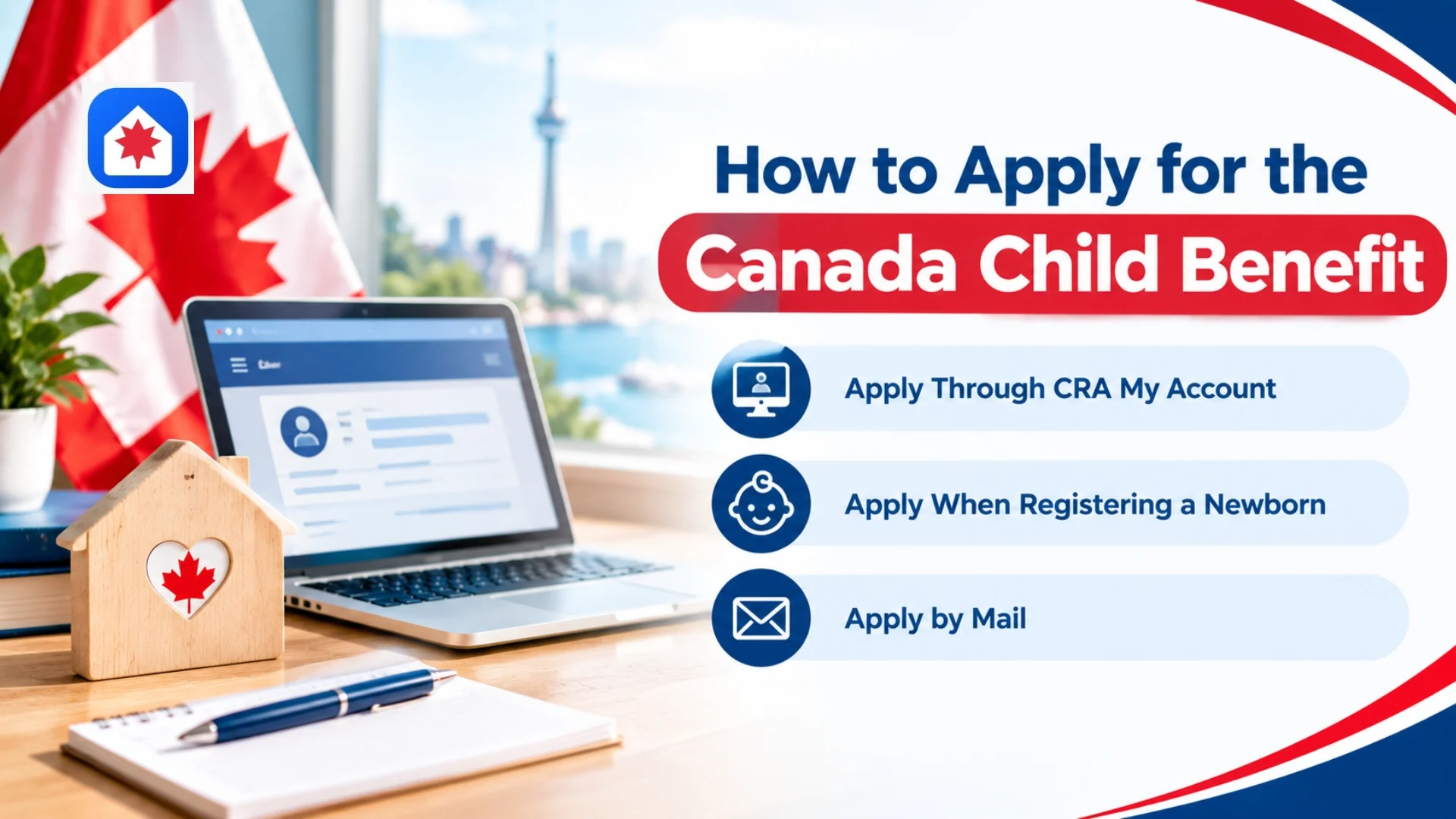
You should apply as soon as you meet the eligibility requirements. You do not need to wait until your next tax return if you are eligible to apply now. The CRA provides three main application routes, depending on your circumstances.
4.1. Apply Through CRA My Account
If you have a CRA account, applying online is a convenient option.
- Sign in to your CRA account.
- Open the Benefits and credits section and select the option to apply for child benefits.
- Enter the requested information about your child, your household, and your eligibility.
- Upload or provide any supporting documents requested by the CRA.
- Submit your application and check your account for updates or requests for additional information.
If the CRA has never paid benefits for your child, you may need to provide proof of birth. Follow the instructions displayed during the application process.
4.2. Apply When Registering a Newborn
Some provinces and territories offer an automated benefits application service when you register a newborn's birth. If this service is available in your province or territory, you may be able to apply for the CCB as part of the birth registration process. You must provide the required information and consent to have it shared securely with the CRA.
Check the official Automated Benefits Application guide to see how the process works. Not every birth registration process automatically submits a CCB application, so make sure you complete the relevant steps.
4.3. Apply by Mail
If you cannot apply online or prefer a paper application, you can complete Form RC66, Canada Child Benefits Application, and mail it to the CRA using the address specified in the form's instructions.
Depending on your situation, you may also need Form RC66SCH, Status in Canada and Income Information. This form is particularly relevant to certain newcomers and applicants whose citizenship, immigration status, or residency circumstances require additional information. Always use the latest versions of the forms and follow the current mailing instructions published by the CRA.
4.4. Documents You May Need
The exact documents depend on your situation. Prepare the following information where applicable:
- Your Social Insurance Number (SIN) and your spouse's or common-law partner's SIN, if applicable.
- Proof of birth for a child who has not previously been associated with a CCB payment.
- Information about your immigration status and Canadian residency.
- Your date of arrival in Canada, if you are a newcomer to Canada.
- Information about your marital status and your spouse's or common-law partner's income.
- Income information from before you became a Canadian resident for tax purposes, if requested.
- Documents or details supporting a shared-custody arrangement, if applicable.
Documents issued in a language other than English or French may require an acceptable translation. Follow the CRA's current document requirements rather than assuming that a particular document will always be sufficient. After submitting your application, monitor your CRA account and respond promptly if the agency requests further information.
5. When Will Your First Payment Arrive?
There is no single processing time that applies to every CCB application. The CRA must assess your information and may request additional documents before determining your entitlement.
For a newborn application submitted through the automated benefits service, the CRA states that it will generally send a notice or payment within eight weeks after receiving the registration information. Other applications may take a different amount of time.
To avoid unnecessary delays:
- Check that your application is complete.
- Provide any requested proof of birth or immigration documents.
- Make sure your address and banking information are correct.
- Monitor your CRA account for messages and application updates.
You can also check the status of your benefit and your next expected payment through your CRA account.
6. CCB Payment Dates in 2026
The CRA generally issues CCB payments monthly. The benefit year runs from July 1 to June 30, and payment amounts are recalculated each July using the relevant previous-year tax information.
The official CCB payment dates for 2026 are:
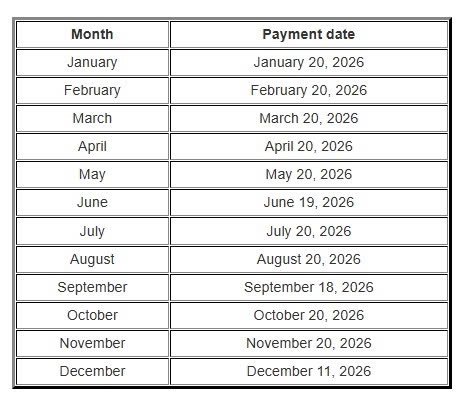
These are scheduled dates, not a guarantee that every applicant will receive money on a particular day.
7. Common Canada Child Benefit Mistakes to Avoid
7.1. Assuming Every Parent Automatically Qualifies
Living with a child under 18 is only one part of the eligibility test. You must also satisfy the caregiving, tax-residency, and applicable immigration-status requirements.
How to avoid it: Review every eligibility condition before applying, especially if you have recently arrived in Canada or your child does not live with you full-time.
7.2. Forgetting to File a Tax Return
Some recipients believe they do not need to file because they earned little or no income. This can interrupt their CCB payments.
How to avoid it: File your annual tax return even if you had no income, and ensure your spouse or common-law partner files as required.
7.3. Assuming the Maximum Benefit Is Guaranteed
The maximum published amount applies only when the relevant income and eligibility conditions are met. A family's actual payment may be substantially lower.
How to avoid it: Use the CRA calculator to estimate your benefit using your family income and number of children. Recheck the estimate after significant income or household changes.
7.4. Failing to Report Shared Custody
Parents who separate may continue receiving an amount calculated using an outdated living arrangement. This can lead to incorrect payments and potential repayment obligations.
How to avoid it: Notify the CRA when the custody arrangement changes. Do not assume that a private agreement between parents automatically updates the agency's records.
7.5. Providing Incomplete Newcomer Information
Newcomers may overlook forms about immigration status or income earned before arriving in Canada.
How to avoid it: Read the application instructions carefully and provide all requested information, including details about a spouse or common-law partner where applicable.
7.6. Treating Payment Dates as Guaranteed Deposit Dates
The published schedule shows when payments are scheduled, but a new application or an eligibility review may affect when you receive money.
How to avoid it: Check your account rather than relying only on a calendar, particularly when you are waiting for your first payment.
Frequently Asked Questions
1. Is the Canada Child Benefit taxable?
No. The Canada Child Benefit is tax-free. You do not need to report CCB payments as taxable income on your annual tax return.
2. Can newcomers receive the Canada Child Benefit?
Yes, if they meet the eligibility requirements. Permanent residents and protected persons may qualify once the relevant conditions are satisfied. Temporary residents generally must have lived in Canada throughout the previous 18 months and hold a valid qualifying permit in the 19th month. Newcomers may also need to provide immigration, residency, and income information.
3. I get the CCB if I have no income?
Potentially, yes. There is no requirement to earn a minimum amount of income to qualify. Your eligibility depends on the program's conditions, and lower adjusted family net income generally results in a larger benefit. You must still file the required tax returns each year to continue receiving payments.
4. Do both parents need to apply for the CCB?
No. When both parents live with the child in the same household, only one parent should generally apply. Shared-custody arrangements are different: both eligible parents may apply when the child lives with each parent between 40% and 60% of the time.
5. I receive the CCB if I share custody?
Yes. If the CRA considers the arrangement to be shared custody, each eligible parent generally receives 50% of the amount they would have received with full-time care. The calculation is based on each parent's own adjusted family net income.
6. Does the Canada Child Benefit depend on the province where I live?
The federal CCB's core calculation is based on adjusted family net income, the number of eligible children, and their ages. However, related provincial and territorial child benefits may vary by location. Quebec also has a separate provincial Child Assistance Payments program.
The Canada Child Benefit can provide meaningful financial support to eligible families raising children under 18. To receive the right amount, start by confirming your eligibility, estimating your payment using the CRA's current figures, and submitting a complete application. After you qualify, file your tax returns every year, keep your family and immigration information up to date, and report changes in custody or caregiving arrangements promptly. These steps help reduce interruptions and ensure the CRA can calculate your entitlement correctly.
For the most accurate information, consult the official Canada Child Benefit guidance and use the CRA's online tools to estimate or check your payments.
Thank you for taking the time to read this article.